GearBerlin
Tool hire for an Altbau renovation in Berlin
Year round
Lime plaster over soft brick, hollow ceilings, timber floors with sand fill and no lift. A Berlin pre-war flat rules out half the tools people hire for it. What is worth a hire ticket, what the consumables really cost you, and why the waste is the expensive half of the job.
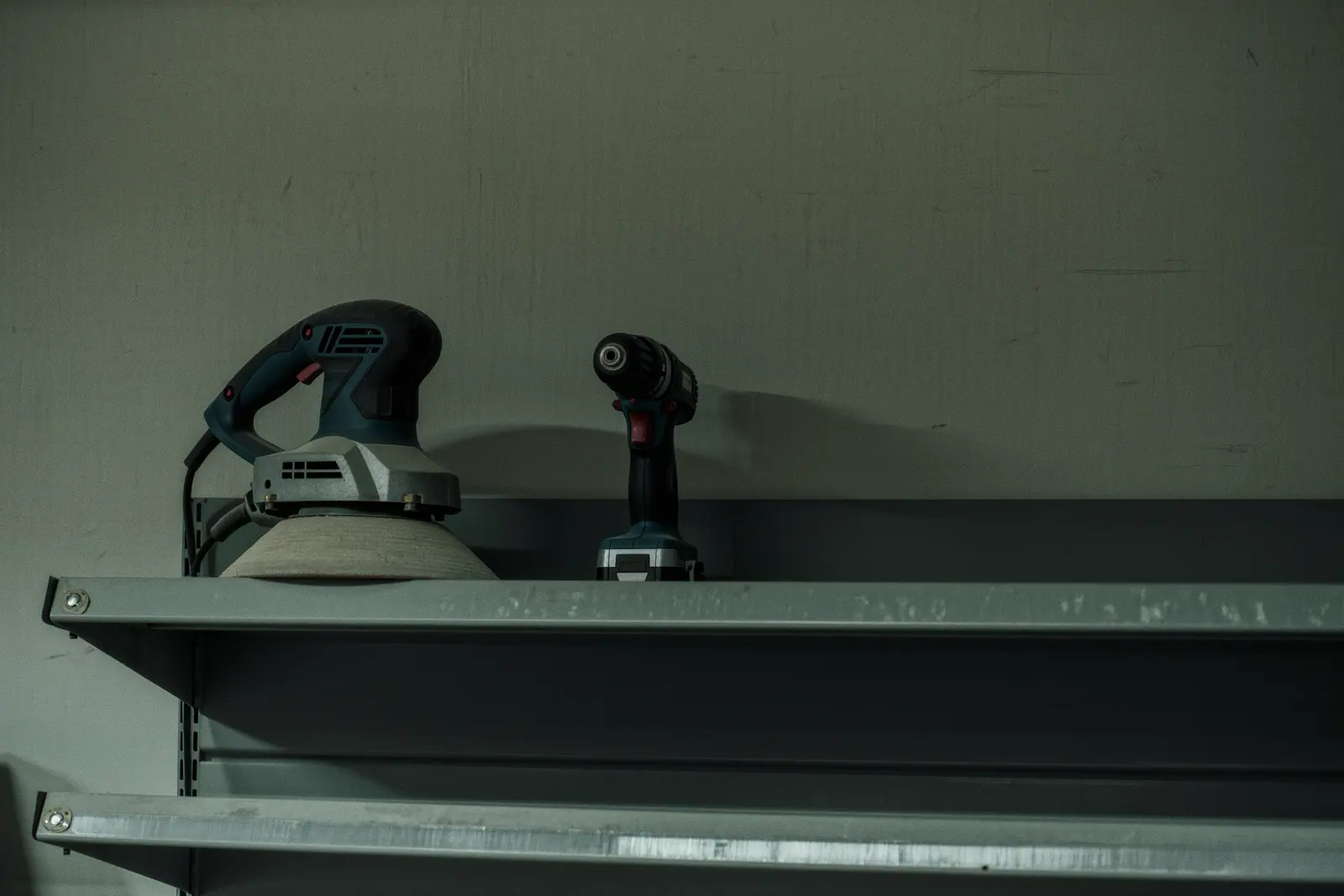
You have the keys and six weeks before the floor goes down. The flat is on the fourth floor in Friedrichshain, there is no lift, and the previous tenant left a wall of chipboard over a doorway that was bricked up at some point in the seventies. The rotary hammer in your bag has already made one hole the size of a fist in what turned out to be soft brick behind three centimetres of lime plaster.
That is the whole problem in one sentence. The building is not made of the material most hire tools are designed for.
What the building is, and what that rules out
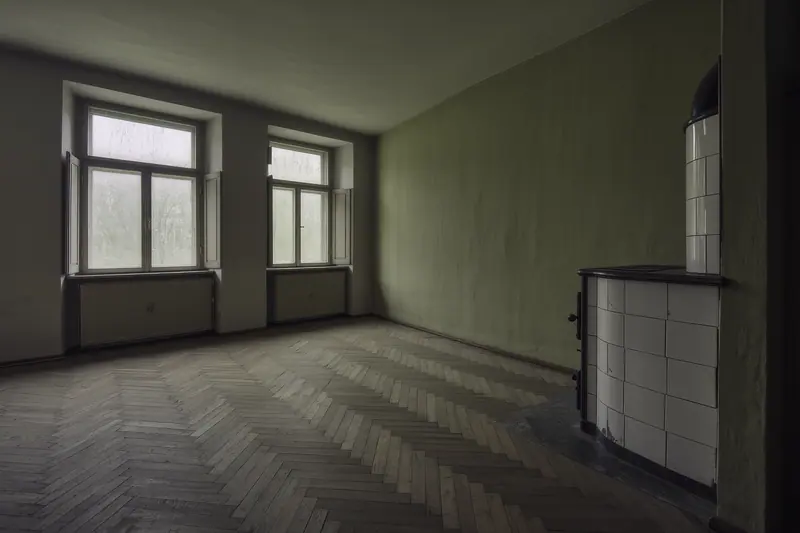
Pre-war Berlin stock, roughly anything from before the First World War, is a consistent set of materials.
- Walls: soft fired brick, often with a lime plaster skin, sometimes a timber stud partition where a room was divided. Concrete appears only in lintels and a few later interventions.
- Ceilings: timber joists carrying lath or reed and plaster. Hollow, soft, and unable to take a heavy anchor. The plaster cracks along the laths if you chase it.
- Floors: boards on those same joists, with a layer of sand between them for sound and fire. Open a floor and the sand comes with it.
- Windows: double casements, two separate frames in one opening, with a cavity between.
Post-war slab-built flats are the opposite: reinforced concrete everywhere, which means diamond drilling, real dust extraction and no chance of chasing a cable by hand. Know which building you are in before you write the hire list, because almost nothing on it transfers.
The hire list, by job
| Job | Hire | Why not the obvious tool |
|---|---|---|
| Stripping old wallpaper, several layers | Steam stripper | Scraping dry pulls the lime plaster face off with it |
| Taking off failed plaster | Chipping hammer, light class | A demolition hammer removes the wall as well |
| Reaching a 3.5 metre ceiling | Mobile scaffold tower | A ladder makes a two-day ceiling into a five-day ceiling |
| Cutting a chase for cable | Wall chaser with extraction | An angle grinder fills the flat with dust in ninety seconds |
| Dust control | M-class industrial vacuum, zip doors | A workshop vacuum passes the fine fraction straight through |
| Mixing filler and screed | Forced-action mixer or a paddle mixer | Hand mixing is slower than the material sets |
| Moving anything heavy | Stair-climbing sack truck, furniture straps | Five half-flights, and the turn at every landing |
| Sanding the floor | See the separate machine question | Wrong machine, thin floor, permanent damage |
The floor is the item where hiring the wrong thing is unrecoverable rather than merely annoying, and it has its own set of rules — those are in floor sander hire and the mistake with old parquet.
Power, voltage and the flat you are working in
Two electrical facts govern hire in this kind of building. The first is that larger machines — big belt sanders, some mixers, some core drills — are built for a three-phase supply, and very few flats have one. Ask for the voltage on the data plate, not the machine name, and ask whether a single-phase version exists. It will be slower and it will be the only one you can plug in.
The second is that the flat has few circuits, shared across rooms. A chipping hammer and an industrial vacuum running together on the same one is a tripped breaker every ten minutes. Split them across two sockets in different rooms and find out beforehand which room is on which circuit.
Consumables, deposit and what the day means
The hire rate is the small number. Blades, discs, sanding belts, filter bags and steam-stripper cloths are counted separately and billed on return, and a floor job can spend more on abrasives than on the machine. Ask for the consumable price list up front, and ask whether unused ones can go back.
Deposits at general tool counters are modest and mechanical: identity document, a card hold, a signature. That is a different world from a camera or audio house, where the deposit is replaced by paperwork — see what a gear house wants instead of a deposit if you are hiring across both kinds of place in the same month.
Nail down the definition of the day. Some counters run a genuine twenty-four hours from collection. Others run to a fixed return the next morning, which turns a “one-day” hire into an evening. The weekend structure — out on Saturday, back Monday, billed close to a single day — is the cheapest way to do a big push, and it is why every stairwell in the inner districts sounds like a workshop on a Saturday afternoon.

The waste is the expensive half
Nobody budgets for this and everybody pays for it. Rubble, old plaster, tiles and sand are not household waste and cannot go in the building’s bins. You have three routes: carry it to a recycling yard yourself in rubble sacks, hire a skip bag that a lorry lifts from the kerb, or hire a proper skip.
The moment a skip or a bag stands on the road or in parking bays, it stops being a hire question and becomes a permission question. That is use of public space, handled by the district office, normally applied for several working days ahead, frequently with a signed parking suspension so the bays are clear when the lorry arrives. Districts run this differently and the requirements change, so verify with the district office before you book anything.
Then there is the staircase. Five flights with rubble sacks is a day of work in itself, and the sacks are heavier than they look because of the sand.
What to hire first
If the budget only stretches to two machines, make them the dust extraction and the scaffold tower. The vacuum keeps the job in one room instead of spreading it through the flat, and the tower is what makes the high ceilings — the reason you took this flat — usable rather than a permanent excuse.
The thing people get wrong is treating dust as a cleaning problem at the end. Fine plaster dust and the sand from the floor void get into the window cavities, the parquet gaps and every socket, and no amount of hired equipment gets it back out afterwards. If the furniture is still in the flat, it should not be — put it in a storage unit for the duration and work in an empty room.
What to check before you book
- Establish what the walls and ceilings are made of before you hire anything percussive. Soft brick and lime plaster need a different machine from a concrete slab.
- Ask which consumables are billed separately — blades, discs, belts, filter bags — and how they are counted on return.
- Check the machine voltage. Anything asking for a three-phase supply is useless in most flats, and the single-phase version is a different hire.
- Measure the stairwell turn and the flat door before hiring a scaffold tower or anything on a wheeled base.
- Hire dust extraction as a machine in its own right, not as an accessory. It is the difference between one room being unusable and the whole flat.
- Sort waste disposal before demolition starts. A skip on the street needs a permit and lead time, and rubble is not household waste.
- Confirm what the hire day means: twenty-four hours from collection, or return by a set time the next morning.
Questions people actually ask
- Which tools are actually worth hiring rather than buying for a flat renovation?
Anything heavy, anything you need for two days, and anything with a consumable you cannot store. A scaffold tower, a chipping hammer, a wallpaper steamer, an industrial dust vacuum and a floor sander all belong on a hire ticket. A cordless drill, a multi-tool and a decent level are cheaper to own than to hire twice, and you will use them again.
- Can I drill into pre-war Berlin walls with a normal hammer drill?
For soft brick and lime plaster a normal drill on masonry setting is usually the right tool, and a heavy rotary hammer on hammer mode will blow a crater rather than a hole. Concrete lintels above windows and doors are the exception and do need a rotary hammer. Ceilings are often hollow lath and plaster, which takes cavity fixings rather than plugs and will not hold anything heavy at all.
- How do I get building rubble out of a Berlin flat?
Not with the household bins. Construction waste goes to a recycling yard, either carried there yourself in bags or collected in a hired skip or skip bag. If the skip stands on the public highway or in parking bays, that is use of public space and needs a permit from the district office, usually applied for several working days in advance, often with a parking suspension. Rules and lead times vary by district, so verify before you book the skip.
- When is tool hire hardest to get in Berlin?
Late March to June. Everyone starts the job they thought about all winter, and scaffold towers, sanders and mixers move fastest. Deep winter is the easiest time to walk in and take what you want, with the caveat that plaster and screed dry slowly in a cold flat and paint needs the heating on.