GearBerlin
Floor sander hire, and the mistake with old Berlin parquet
Year round
Berlin herringbone parquet is thin, nailed and usually already sanded twice. Hiring the wrong machine takes a floor that had twenty years left and finishes it in an afternoon. How to measure the wear layer, which machine to hire, and the point at which the honest answer is to clean and oil instead.
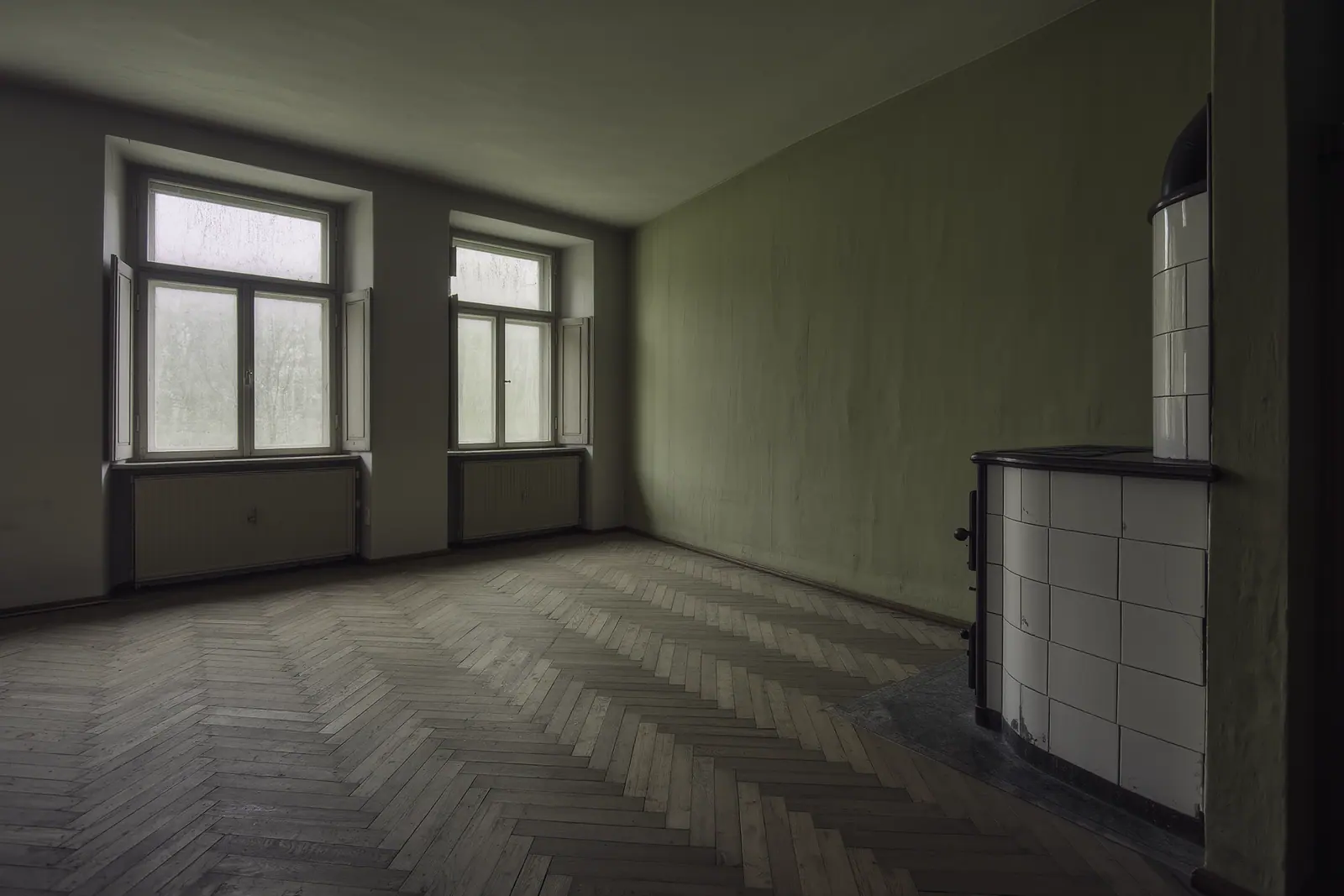
The floor is the reason you took the flat. Herringbone, laid in the twenties, darkened unevenly where a rug sat for forty years, with a pale rectangle in the corner where the tiled stove used to stand. Somebody in the nineties took a machine to it, and somebody else did the same after the next tenant left.
Before you ring a hire counter, get on your knees at the kitchen doorway with a chisel and lift one stick. What you are measuring is not the thickness of the parquet. It is the thickness of the wood above the tongue, which is all the material a sander is allowed to have.
The measurement that decides everything
Traditional Berlin stick parquet is a thin wear layer over a tongue, nailed down onto boards, over joists, over sand. New, there is not a great deal of wood above that tongue. A machine pass with a coarse grit takes a real fraction of it, and a full three-pass sanding takes more.
Two floors that look identical can be in completely different situations. One has never been machined and will take a full sanding twice more. One has been done twice and has a season left. There are three ways to find out which you have.
- Lift a stick. A doorway or a threshold strip is the least visible place. Measure above the tongue with a caliper.
- Look at a heating pipe. Where a pipe rises through the floor there is usually a cut edge or a collar you can lift, and the full section is visible.
- Look for nail heads. If any are showing, or a stick rocks when you press it, the floor has already been taken as far as it goes.
If the answer is that almost nothing is left, stop. A thin floor cleaned, lightly refreshed by hand and oiled looks honest and lasts. The same floor put through a drum sander looks superb for two years and then has to be replaced entirely, which is a different order of cost and a different kind of loss in a building where the floor is original.
The machines, and what each one does to a thin floor
| Machine | Removes | Use it for | Risk on old parquet |
|---|---|---|---|
| Belt or drum sander | The most, fastest | Thick, never-sanded floors, heavy levelling | Dishes and gouges in seconds if you pause |
| Single-disc sander | Much less per pass | Thin floors, refresh work, between coats | Slow, and will not level a bad floor |
| Multi-disc or planetary | Least, very even | Previously sanded floors, final passes | Almost none, which is the point |
| Edge sander | Aggressive in a small area | The perimeter the big machine cannot reach | Visible halo if the grit does not match |
| Corner or delta sander | Small | Under radiators, in the stove alcove | Only time |
The classic instruction for herringbone is to work diagonally across the pattern so you cut across the grain of half the sticks. That is correct, and it is also the most aggressive thing you can do. On a floor with a millimetre or two left, skip the coarse diagonal pass entirely, start with the finest grit that actually cuts, and accept that some of the old colour stays.
Power, weight and four flights of stairs
Two practical obstacles kill more sanding weekends than technique.
The first is supply. Large belt machines are commonly built for a three-phase feed, and flats in this stock have household single-phase circuits and nothing else. Ask the counter for the machine’s supply requirement before you reserve it, and ask what single-phase alternatives they hold. The single-phase machines are slower, which on a thin floor is a feature.
The second is the stairwell. A big sander comes apart into a body and a weight and is still an awkward two-person carry up four half-flights with a turn at each landing. Yards that serve this kind of work usually deliver, and it is worth the line on the invoice. So is booking the collection for a Monday, because carrying it back down on a Sunday evening after two days of sanding is how people drop things.
Dust, sand and the flat below
Sanding fills a flat with fine wood dust, and in this building type it also disturbs the sand between the joists, which puffs up through every gap in the floor and every gap around the skirting for days.
Seal doorways with zip doors rather than taped sheeting, take everything soft out of the flat, and hire dust extraction rated for fine dust rather than relying on the bag on the machine. Close the window cavities — the gap between the two casements is a dust trap that takes hours to clean.
Then the neighbours. A floor sander is a low, continuous, structure-borne noise that travels down through the joists rather than through the air, so the flat below hears it far better than the one next door. Night-time quiet and Sunday as a quiet day are the general rules, with the binding wording in your house rules and the local ordinance — check both, and treat a Saturday afternoon as the outer limit of what is reasonable regardless of what the paper says. A note in the stairwell a week ahead costs nothing.
The finish sets the calendar
The hire clock keeps running while the floor dries. Whatever system you choose, work backwards from it: the last sanding pass, the vacuum, the first coat, the curing time, the intermediate pass, the second coat, and only then furniture. Oiled floors in particular need days before anything heavy goes back, and longer before a rug traps the surface.
Winter makes this worse rather than better. You need ventilation and you are throwing away a heated flat’s warmth to get it, and cold, damp air slows curing. If you have the choice, sand between April and June, when you can leave the windows open and the flat dries in a day.
Where the furniture goes in the meantime is a real question and usually the deciding one on timing — a storage unit for the duration of the works costs less than a delayed finish. And if the sanding is one item in a longer renovation, the rest of the hire list, the dust strategy and the waste permissions are in tool hire for an Altbau renovation.
The mistake, plainly: hiring the biggest machine available because it is on the shelf and the weekend is short. A drum sander in the hands of somebody who has not used one, on a floor with a millimetre left, produces a wave pattern you can see from the doorway every day for as long as you live there.
What to check before you book
- Measure the wear layer above the tongue before you book anything. Lift one stick at a threshold or look at the cut edge where a heating pipe passes through.
- Ask whether the machine is single-phase or three-phase. Most flats in this stock have no three-phase supply and the hire is wasted.
- Confirm how sanding belts and discs are billed, and whether unopened ones can be returned.
- Hire the edge sander and the corner sander at the same time. Neither is optional and both are usually separate line items.
- Ask the weight of each part and whether the yard delivers. A large belt machine is not a one-person carry up four flights.
- Book dust extraction with the machine, and seal every doorway in the flat, not just the room you are working in.
- Plan the finish and its drying time inside the hire window. The clock does not stop while the oil cures.
Questions people actually ask
- How do I know if my parquet can be sanded again?
Measure the material above the tongue, not the total thickness. Traditional Berlin stick parquet is thin to begin with and many floors have already been machined once or twice since the nineties. Lift a single stick at a doorway, or examine the cut edge where a heating pipe rises through the floor, and measure with a caliper. If you can see nail heads or the tongue is close to the surface, the answer is no.
- Which floor sander should I hire for herringbone?
For a floor with plenty of material left, a belt or drum machine cuts fastest and is the least forgiving. For a thin or previously sanded floor, a single-disc or multi-disc machine removes far less per pass and is much harder to gouge. Herringbone traditionally invites diagonal passes, which is also the most aggressive direction, so on a thin floor use the finer machine and accept it will take longer.
- Do I need three-phase power for a floor sander?
The large professional belt machines usually do, and most flats in the older stock have only single-phase household circuits. Hire counters carry single-phase versions of most machine types; they are slower and lighter, which on a thin floor is not a disadvantage. Check the data plate value with the counter rather than assuming, and check which circuits in the flat can carry it.
- How long is a flat unusable after sanding and finishing?
Longer than the sanding. Sanding a normal-sized flat is a weekend with the right machines; the finish is what governs the calendar. Oil systems need days of curing before furniture goes back and longer before rugs, and cold winter air with the windows open slows everything. Plan the hire and the return around the finish schedule, not the other way round.