PlacesBerlin
Short-term flats in Berlin and the registration question
Year round
People arrive in Berlin for three months and discover in week two that they cannot register their address, which quietly blocks a bank account, a tax number and a phone contract. The two separate rule sets behind that, how the four kinds of furnished let differ, and what to ask a landlord before any money moves.

You have three months of work in the city. You found a furnished flat in Moabit through a listing, paid a month up front, and moved in with two suitcases and a box. In the second week your employer asks for a registration certificate, the bank asks for the same thing, and you write to the landlord, who replies that registration is not possible at this address.
Nothing illegal has necessarily happened. You have simply rented the wrong category of thing, and the mistake is common because two entirely separate rule sets are involved and listings blur them.
Two rule sets, one flat
The rules about the property. Berlin treats housing as a protected use. Turning a flat into permanent short-term letting is a change of use, and whole-flat short lets generally require a permission or registration from the district, whose reference number is expected to be shown in the advertisement. The thresholds, the exemptions for letting part of your own home and the enforcement all sit at district level and have been revised more than once, so check the current position with the district office rather than an article from a few years ago.
The rule about the person. Anyone moving into a dwelling has to register their address at a citizens’ registration office within a period set nationally. That is a duty on you, not on the landlord — but it requires a written confirmation from whoever provides the housing, and only they can issue it. If they will not, you cannot register, whatever your intentions.
The two rules are related but not identical. A flat can be perfectly lawful to let and still be one where the landlord declines to issue the confirmation.
Four things that all look like the same advert
| Arrangement | Typical length | Who signs | Registration usually possible | Ends |
|---|---|---|---|---|
| Holiday or short let | Nights to weeks | The operator | No | On the date, no flexibility |
| Furnished temporary let | One to eighteen months | The owner | Often, if agreed in writing | Fixed term, stated reason |
| Sublet from a tenant | Weeks to a year | The sitting tenant | Only with the head landlord’s permission | When the tenant returns |
| Serviced apartment | Weeks to months | The operator | Sometimes | Notice period in the contract |
| Unfurnished tenancy | Open-ended | The owner or manager | Yes | Statutory notice |
The sublet is the one to be careful about, and it is also the most common way people actually live here for a few months. A tenant subletting needs the head landlord’s permission. Without it, the arrangement is fragile, your registration may not go through, and you have very little standing if it collapses.
Ask to see the permission. A tenant who has it will produce it in a minute; one who does not will change the subject.
What the money looks like
Furnished short lets carry a premium over ordinary rent that people from other cities usually underestimate, and the structure varies.
- A deposit, or prepaid rent, or both — sometimes several months at once.
- Utilities either included as a flat sum or billed on. A flat sum is convenient and can be generous or mean; ask what happens if consumption is higher.
- Internet, cleaning and linen appearing as separate lines in serviced arrangements.
- A final cleaning fee at the end, which is normal in short lets and should be in the contract rather than announced afterwards.
Never send a deposit before somebody has stood in the flat. Advance-fee approaches, keys promised by courier and stories about the owner being abroad are the standard pattern, and they run hardest in exactly the weeks when the market is tightest.

The rhythm of the year
- January and February — the easiest and cheapest months. Little competition, and landlords with an empty flat are flexible.
- March to June — steady, with pressure around the start of the summer.
- July and August — a strange market. Plenty of sublets from people leaving for the summer, almost none of them registrable.
- September and October — the worst weeks of the year. The academic intake, the autumn job starts and the returning summer all land together.
- November and December — quiet again, with a small squeeze from short bookings around the winter market season.
Whatever the month, dates at the end of the month are harder than mid-month ones, because moving days cluster there and everything else — vans, helpers, storage — is scarce at the same time.
Reading a listing properly
Look for four things before the photographs: whether the advertisement carries the reference number the city expects for a short let, whether registration is explicitly addressed, whether a written contract is offered, and whether you can view the flat. Missing any one of them is a question. Missing all four is an answer.
Then read the practical detail. Is the flat in a front building or a rear one, on which floor, and is there a lift. Is the heating central or a gas boiler in the flat. Is the room the photograph shows the only heated one. These are the things that turn a tolerable three months into a cold and noisy three months.
What to do about it
Decide the registration question first and let it filter everything else. If you need to register, say so in the first message you send about any flat, and treat a vague answer as a no. Landlords who issue the confirmation say so plainly, because it is one of the few things that makes their flat more attractive than the one next door.
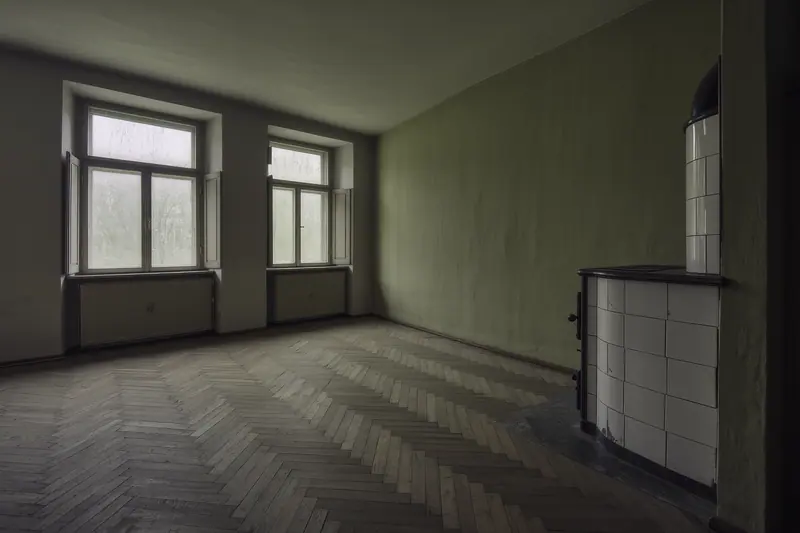
If the stay is genuinely a holiday and you do not need to register, the whole question falls away and the market is much larger and cheaper. That is also the market in which the odder options make sense — a moored floating flat on the Havel is a real short let in this city and a much better summer than a courtyard-facing back room. And if you end up with the opposite outcome, an unfurnished long-term flat that nobody has touched since the eighties, the first month is a hire counter problem rather than a housing one.
What to check before you book
- Decide first whether you need to register your address. If you do, only consider lets that state in writing that registration is possible.
- Ask for the landlord confirmation document by name and confirm it will be issued on the day you move in.
- For a sublet, ask to see the head landlord's written permission. Without it your position is weak and registration may fail.
- Check whether a whole-flat short let carries the reference number the city expects on listings, and verify current requirements with the district office.
- Get the contract in writing before any deposit moves, and never pay before you or someone you trust has seen the flat.
- Establish what the rent includes: heating, electricity, internet, cleaning, and whether a final cleaning fee is added.
- Confirm the notice period both ways. Furnished short lets often end on a fixed date with no flexibility at all.
Questions people actually ask
- Can I register my address at a short-term flat in Berlin?
Only if the landlord issues you the written confirmation the registration office requires, and many short-let hosts will not. Registration is a duty on the person moving in, done at a citizens' registration office within a period set nationally, and it needs that document from whoever provides the housing. A listing that says registration is not possible is telling you it is a holiday let rather than a home, so treat that line as the most important one in the advertisement.
- Why does registration matter for a three-month stay?
Because a great deal else hangs off it. A registration certificate is normally asked for when opening a bank account, obtaining a tax identification number, signing a mobile or broadband contract, registering a vehicle or enrolling anywhere. None of that is impossible without it, and all of it becomes slow. If your stay involves work rather than a holiday, treat registration as a requirement rather than a formality.
- Are short-term whole-flat lets legal in Berlin?
They are regulated rather than banned. The city treats the permanent conversion of housing to short-term letting as a change of use, and whole-flat short lets generally need a permission or registration whose reference is expected to appear in the listing. The detail sits with the districts and has changed several times, so verify the current position with the district office rather than relying on an older account of the rules.
- When is the market at its worst?
September and October, by a wide margin, when the academic year, the autumn job intake and the last of the summer arrivals collide. January and February are the easiest and cheapest months to find something, and month-end dates are always harder than mid-month ones because everybody moves on the same days.