On the roadBerlin
Car sharing or a day rental, in a city like this one
All year
Three products, not two, and the deciding factor is rarely the hourly rate. Where the free-floating home area ends, why a shared car can sit in a managed parking zone and a hire car cannot, how long registration actually takes, and four common Berlin trips with a clear answer for each.
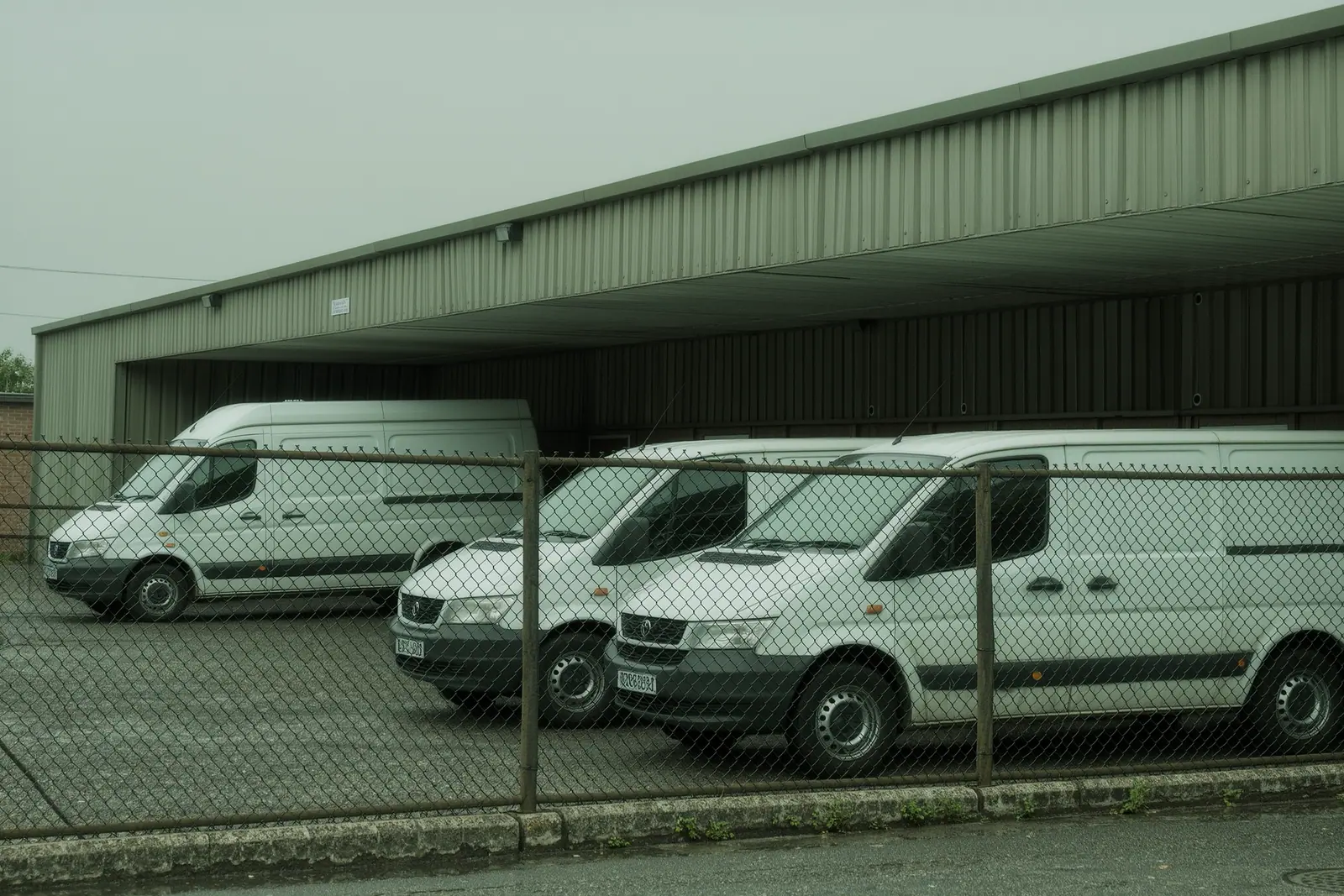
Berlin is a bad city to own a car in and a good one to borrow one in. Parking is managed across most of the inner districts, the public network is dense enough that a car is a liability on four days out of five, and then on the fifth day you need to collect a wardrobe from Marzahn or get to a lake with three people and a cool box.
The question is which kind of borrowing. There are three products here and they are priced for completely different journeys.
Three products
Free-floating. Cars parked on the street, unlocked by app, charged by the minute with hourly and daily packages. You pick up wherever one happens to be and leave it wherever you finish, inside a defined home area. Fuel or charging is included.
Station-based. Cars that live in a fixed bay and must come back to it. Cheaper per hour than free-floating, bookable in advance, and the right shape for a planned round trip. Useless for one-way journeys.
Classic day rental. A depot, a contract, a deposit and a vehicle for twenty-four hours or more. Lowest cost per hour by a wide margin once the day is long, and the only sensible option for a proper distance.
| Trip | Best option | Why |
|---|---|---|
| Twenty minutes across town at midnight | Free-floating | No commitment, no return leg |
| Collecting furniture from an outer district | Free-floating estate or a small van | One-way, and you can leave it at the door |
| A day at Wannsee or Mueggelsee | Day rental | Beyond the home area, and standing time is free |
| Weekend in Brandenburg or on the coast | Day rental | Distance packages, not minute rates |
| An airport run with luggage | Depends | Sharing fleets treat the airport as a special zone |
| A car parked outside your flat for three days | Free-floating, or neither | A hire car has no permit for a managed zone |
The parking difference nobody prices
This is the argument that decides most cases and it almost never appears in a comparison.
Free-floating fleets operate under city-wide arrangements that let their vehicles stand in managed residential zones. A hire car from a depot does not. Resident permits are issued against a vehicle registered at an address, so a rental car parked outside your flat in Prenzlauer Berg or Kreuzberg needs a ticket during the charged hours, bought at the maximum permitted duration, over and over.
For a day trip that leaves at eight and returns at eight it is irrelevant. For a car you keep for a long weekend and use twice, it is the largest hidden line in the budget — and it is exactly the same problem that makes parking a hire van so much harder than hiring one.
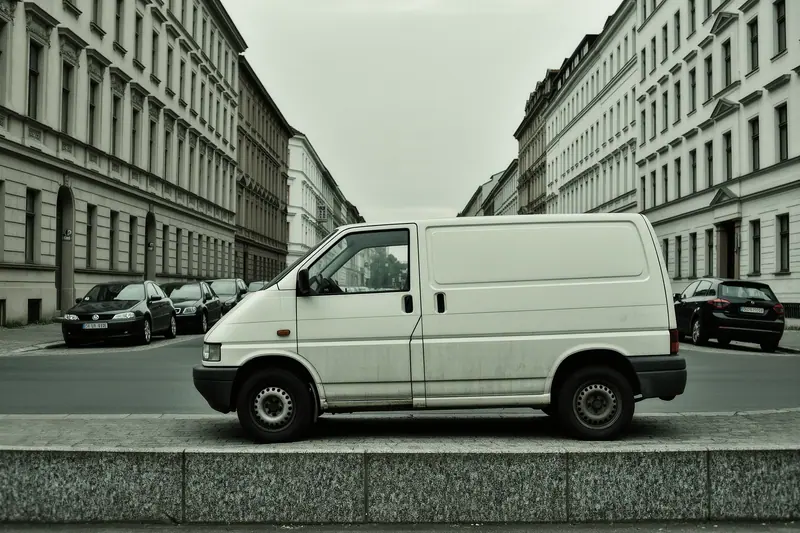
Registration is not same-day
Everyone plans the trip and nobody plans the account.
Joining a sharing service means a licence check through an identity verification process, and it takes hours at the very least. For a licence issued outside the country it can take days and occasionally it fails outright, at which point your plan for Saturday no longer exists.
Do it a week ahead. If you are visiting and the car is central to the trip, book a conventional rental with a confirmed reservation instead, because a booking is a promise and an app account is not.
Four Berlin trips, four answers
A furniture collection in Marzahn or Lichtenberg. Free-floating estate car or a small shared van, one-way out and one-way back with different vehicles. You are not paying for the two hours you spend disassembling a bed.
A summer day at the Havel or Müggelsee. Day rental. Both are outside the home area, and the whole point of the day is that the car stands still for six hours. Minute-based pricing punishes standing still; a day rate does not.
A weekend on the coast. Day rental, or a camper if you are sleeping in it — the trade-off is set out in campervan rental for the Baltic coast. Watch the included kilometres either way; the coast is a 400 to 600 kilometre round trip.
Getting home at two in the morning from Neukölln. Free-floating, and this is its best use case by a distance. It is also the exact argument that makes a sharing app worth keeping alongside a rented bicycle, discussed in bike rental against the sharing apps.
The trap on each side
The sharing trap is the boundary. Ending a rental outside the home area either cannot be done or costs a collection fee, and people discover this at the far end of the day when they are tired and want to go home. Look at the map before you set off, not after.
The day rental trap is the depot clock. Many yards close early on Saturday and stay shut on Sunday, so a Saturday hire is either back by lunchtime or it becomes a Monday return. Ask about key-drop before you book; where it exists it turns a tight day into a relaxed one, and where it does not, the two-day rate is usually worth paying rather than racing across the city at four in the afternoon.
What to check before you book
- Register with any sharing service days before you need it. Licence verification is not instant and cannot be rushed on the morning of the trip.
- Check where the home area ends on the map. Ending a rental outside it means either a charge or driving back.
- Compare the included kilometres on a day package, not the day rate. City packages are frequently capped low.
- Ask a day rental depot what their opening hours are for return, including Saturday afternoon and Sunday.
- Work out where the vehicle will stand overnight before you book anything for more than a day. A hire car has no resident permit in a managed zone.
- Confirm the excess and whether it can be reduced per trip rather than per contract.
Questions people actually ask
- Which is cheaper for a day at the lakes?
A classic day rental, almost always, once you are past roughly four hours or eighty kilometres. Free-floating cars are priced by the minute with day packages that cap the included distance, and a run out to Mueggelsee or the Havel and back with a long stop in the middle is exactly the shape of trip those caps are designed around.
- Where does the free-floating home area end?
Broadly the inner city and the districts around it, with the boundary set by each operator and adjusted from time to time. The lakes, the forests and most of the outer districts sit outside it, and the airport is usually handled as a special zone with its own charge. Check the map in the app before the trip rather than at the end of it.
- Can I leave a shared car in a resident parking zone?
Generally yes, because the operators hold city-wide arrangements for their fleets, and that is one of the strongest arguments for sharing in this city. A hire car from a depot has no such arrangement and no resident permit, so it needs a ticket during the charged hours like any other visitor vehicle.
- How long does registration take?
Long enough to matter. Licence verification runs through an identity check and is measured in hours at best and days at worst, particularly for a licence issued outside the country. If you land at the airport intending to unlock a car that evening, assume it will not work and have another plan.
- What about driving into the inner city?
Both sharing fleets and mainstream hire fleets run vehicles that meet the low-emission zone requirement, so this is rarely an issue with a car. It becomes a real question with older vans, specialist vehicles and anything collected outside the city, which is worth checking before you book.