On the roadBerlin
Campervan rental for the Baltic coast
May–Sep
The coast is close enough to leave after work and far enough that the wrong vehicle spoils the week. Which size clears the two-metre barriers at the beach car parks, why the pitch shortage starts in February, the two bridges that create the queues, and what a Baltic hire actually includes.
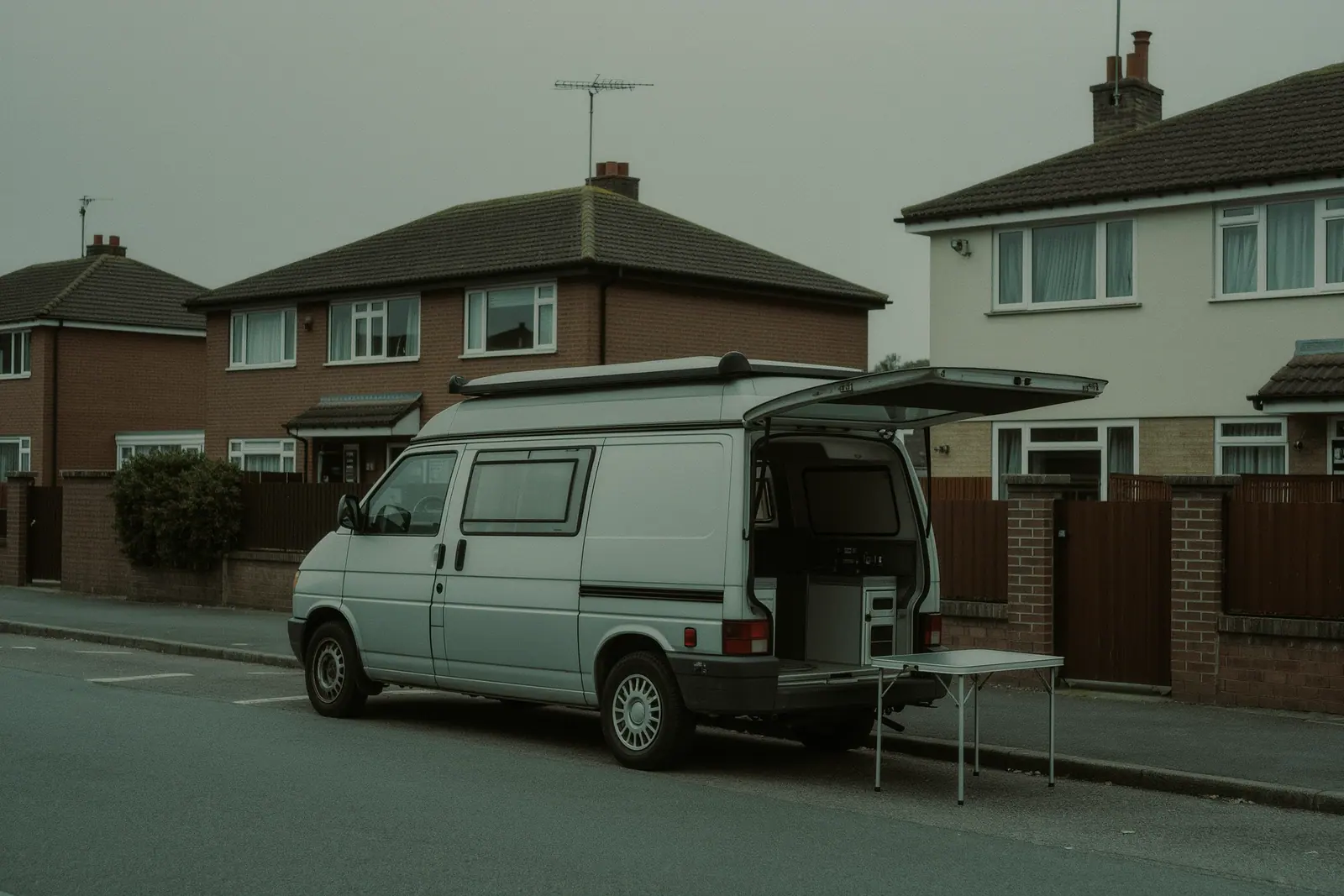
The Baltic is the reason a lot of Berlin owns folding chairs. It is close enough to leave after work on a Friday and be parked in pine woods behind a dune by nine, and it is different enough from the city that a weekend feels like more than that.
The van is what makes the difference between doing it once and doing it every year. Rent the wrong one and you spend the week reversing out of places.
Where you are actually going
| Destination | Distance | Drive | Character |
|---|---|---|---|
| Usedom | ~200 km | 2.5 h via the A11 and B109 | Long sand beaches, resort towns, closest |
| Ueckermuende, Stettin lagoon | ~150 km | 2 h | Quiet, inland water, cheapest |
| Fischland-Darss-Zingst | ~250 km | 3 h via the A19 | Wild, forested, the best of the coast |
| Warnemuende and Rostock | ~230 km | 2.5 h via the A19 | Urban beach, ferries, busy |
| Ruegen | ~280 km | 3.5 h via the A20 | Chalk cliffs, big, congested in summer |
| Wismar and Boltenhagen | ~240 km | 3 h via the A24 | Old town, gentle bays, family-heavy |
The two shortest options are the two most people ignore. The Stettin lagoon and the quiet end of Usedom are half the drive of Rügen and a fraction of the traffic, and for a two-night trip that difference is most of the weekend.
Size, and the two-metre barrier
This is the single most useful thing to know about camper hire for this coast.
A great many beach and dune car parks along the Mecklenburg shore are fitted with a height barrier set at around two metres. They exist precisely to keep motorhomes out, and they do it very effectively. A five-metre conversion on a panel-van base with a low roof clears some of them. Anything with a pop-top, a roof box or a coachbuilt body does not clear any of them.
The other constraint is the roads themselves. Away from the motorways, the Mecklenburg lanes are narrow, frequently cobbled and lined with mature trees planted close to the carriageway. A seven-metre van with wide mirrors on a tree-lined cobbled avenue with a tractor coming the other way is a memorable experience.
Take the smallest van that sleeps your party. If that means two people accepting an outdoor kitchen rather than an indoor one, take the deal.
The season, and why the pitches go first
The coast has a short, intense season. Water temperature only becomes tolerable around the middle of July and the resorts run at capacity through August.
Booking order matters and most people get it backwards. Reserve the pitches first, then the van. Coastal campsites take reservations for the following summer months ahead, and the good ones on the Darss peninsula and the Usedom dunes are effectively full by spring. Municipal motorhome parking areas do not take bookings, are small, and are occupied by early afternoon in August.
Note also that school holiday dates differ between Berlin, Brandenburg and Mecklenburg, and the coast fills whenever any of the three is off. The genuine quiet weeks are the ones in between, plus the whole of September, which is the best month on this coast by a wide margin: warm sea, low sun, empty beaches and sites with space.
Two bridges and a Sunday
Wolgast, the crossing onto Usedom, is a lifting bridge that opens for shipping on a published schedule. When it opens, traffic stops on both sides. In July that means a queue you can watch build for twenty minutes. Look at the times before you set off; the alternative crossing further north takes longer but is predictable.
Stralsund, the way onto Rügen, is the pinch point of the whole coast. On a summer Saturday the approach backs up for kilometres because the entire island arrives and leaves through it. Travel midweek, or early, or accept it.
Sunday evening on the A11 and A19 southbound into Berlin is the other one. Everyone who went north on Friday comes back in the same three-hour window. If the van is due back Monday, come home Monday morning.
What the hire includes, and what it does not
Expect the vehicle, a gas bottle, the kitchen kit, bedding as an extra, and a mileage allowance per day rather than unlimited kilometres. Expect a substantial card deposit and an excess that can run into four figures. Expect fixed changeover days in season, usually Friday or Saturday, which means your holiday is seven or fourteen nights rather than the ten you wanted.
Returns carry a checklist: fuel to the stated level, gas bottle, fresh tank drained, waste tank emptied, toilet cassette cleaned. Every item skipped has a charge, and the toilet one is the expensive one.
Getting the van out of the city is straightforward. Getting it back in needs one thing on the windscreen, because the inner city is a low-emission zone — see driving into the low-emission zone with a rented vehicle.
Two last practicalities. Take bikes: everything on this coast is flat, the cycle paths are excellent, and a van parked once with bikes on the back is far better than a van moved four times a day. If you are only going for a weekend and sleeping indoors, price a plain day rental against a camper first — the arithmetic is in car sharing against a day rental, and for two nights in a guest house it is not close. The flat country you cross on the way is worth a day in its own right, as set out in road and gravel bike rental for the Brandenburg flat.
What to check before you book
- Check the overall height in metres and whether it clears a two metre barrier. Many coastal car parks are barriered specifically to keep vans out.
- Confirm the mileage allowance. Camper hires commonly include a daily kilometre figure with a charge above it, and a coastal week runs up distance quickly.
- Book pitches before you book the van for July and August. The vehicle is easier to find than the space to put it.
- Ask which changeover days the depot runs. Most work on fixed Friday or Saturday handovers in season, which fixes your whole itinerary.
- Confirm the emissions badge on the windscreen so the van can re-enter the inner city on the way back.
- Check what the return requires: fuel level, gas bottle, toilet cassette emptied, fresh tank drained. Each has a charge attached if you skip it.
- Verify the licence category for the weight class, since the threshold is set nationally and larger coachbuilt vans sit close to it.
Questions people actually ask
- How long is the drive from Berlin to the Baltic?
Two and a half to three and a half hours for most of the coast, depending on which bit. Usedom is the closest at roughly 200 kilometres, the Fischland peninsula and Warnemuende sit around 230 to 250, and Ruegen is nearer 280. In a heavy van on a summer Friday, add an hour to all of those.
- Can I park overnight outside a campsite?
Sleeping rough in a vehicle is not permitted along this coast and it is enforced in the resort towns. There is a narrow exception in national road law for stopping to restore fitness to drive, which is not the same as camping, and you should check the current position rather than rely on hearsay. Municipal motorhome parking areas exist in most coastal towns, they are small and they fill early.
- When is the coast actually warm?
The sea is only genuinely swimmable from about the middle of July to early September, and even then it varies week to week with the wind direction. May and June give you long light, empty beaches and cold water. September is the quiet reward: warm sea, thinning crowds, and campsites that still have space.
- Compact van or a big coachbuilt one?
Compact, for this coast, unless you are four people for a fortnight. The villages have narrow lanes and cobbled avenue roads, the beach car parks are barriered at around two metres, and the small municipal parking areas take short vehicles first. A five to six metre conversion goes places a seven metre coachbuilt van simply cannot.
- How far ahead should I book?
For July and August, three to six months, and book the pitches first. Rental fleets in and around Berlin are not large, high summer sells out, and the changeover days mean the available weeks are a small set rather than any seven days you like.