Two wheelsBerlin
Bike rental or the sharing apps, for a week in Berlin
All year
For a week in Berlin the choice is not really about price. It is about where the sharing zone ends, whether you can leave a bike and take the tram home, and what happens to a hired bike overnight in a city with a serious theft problem. A comparison by usage pattern rather than by day rate.
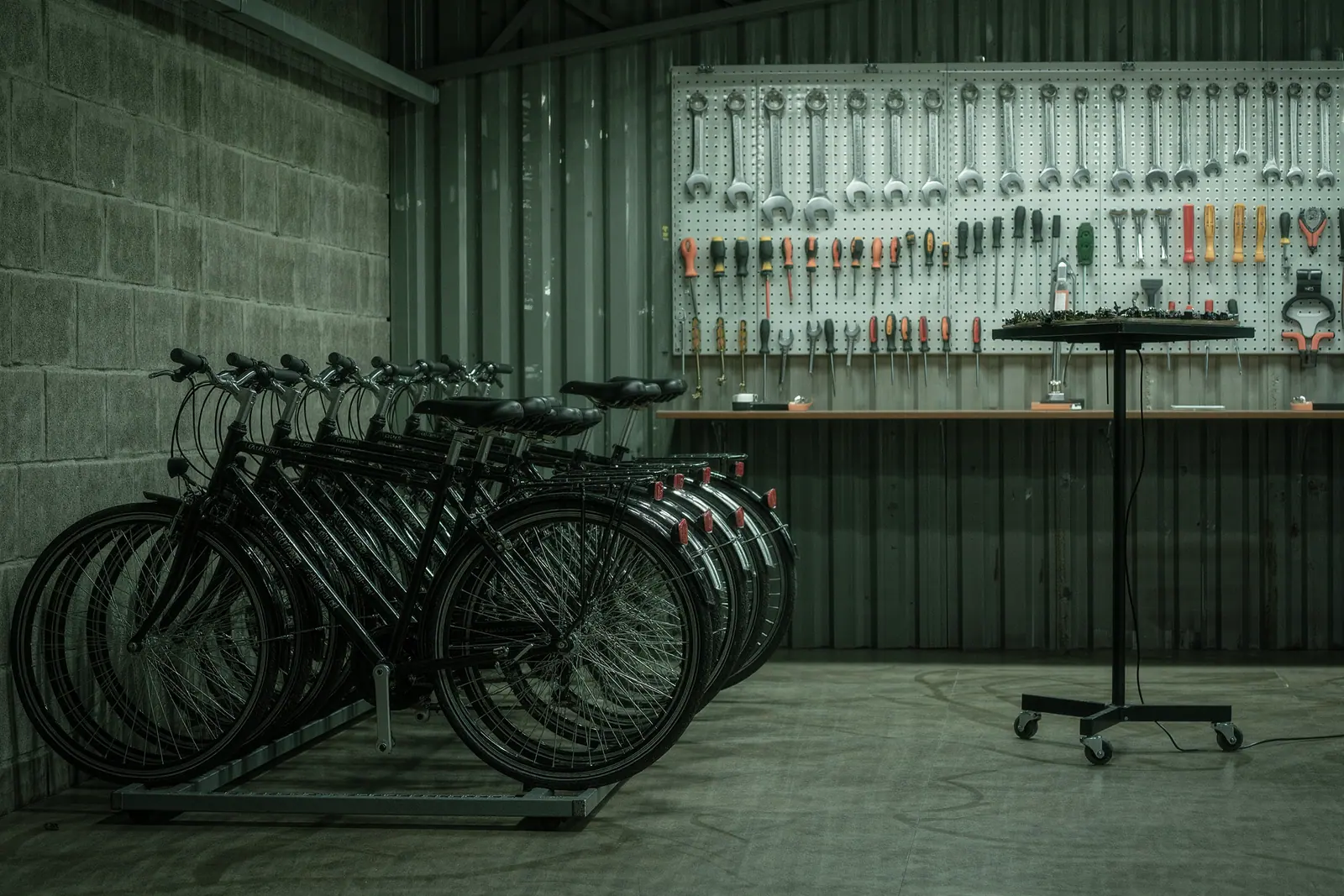
Seven days in Berlin, and the sensible way to get around is a bike. The city is flat, the network is genuinely good in parts and appalling in others, and the distances between districts are exactly wrong for walking. The question is whether you rent one bike for the week or unlock a different one forty times.
Everybody answers this on price. Price is the least interesting part of it.
Four ways to have a bike here
A shop rental. You collect a bike, keep it, and give it back. Day rates typically in the low-to-mid teens of euros in summer and lower in winter, with a week costing something closer to three or four days. It comes with lights, mudguards, a lock and a saddle set to your leg.
Free-floating sharing. An app, an unlock charge, a per-minute rate, and you leave the bike anywhere inside a zone. No commitment, no responsibility, no storage problem. Day and week passes exist and change the arithmetic considerably.
Station-based hire. Fewer of these, tied to fixed racks, cheaper per ride, useless when the rack nearest you is empty at eight in the morning.
A monthly subscription from a shop. A proper bike, kept for a month or more, priced well below the weekly rate multiplied out. The right answer for anyone staying longer than about three weeks, and largely invisible unless you ask.
| Pattern | Best option | Why |
|---|---|---|
| Two or three short hops a day, all inner city | Sharing | You pay for movement, not for standing time |
| A daily commute plus evenings | Shop rental | Per-minute charges compound fast on a routine |
| One long day ride to a lake | Shop rental | The zone stops before the lake does |
| Riding only if it is dry | Sharing | No sunk cost on the wet days |
| Three weeks or more | Monthly subscription | Roughly the price of a long week |
| Winter, daily | Shop rental | Mudguards, hub gear, working lights |
The zone is the real constraint
Free-floating fleets operate inside a defined area, roughly the inner city and the districts around it, with boundaries that differ between operators and move from time to time. Inside it, everything works. Outside it, you either cannot end the rental at all or you pay a collection charge that turns a cheap ride expensive.
This matters here more than in most cities, because the good riding is all outside the zone. The Müggelsee is outside. Wannsee and the Havel are outside. The Brandenburg field roads are far outside. Most of the wall trail is outside, which is why an e-bike for the Mauerweg is a shop conversation and not an app one. Even the eastern half of the Spree and canal ride crosses the line somewhere around Oberschöneweide.
If your week is Mitte, Kreuzberg, Friedrichshain, Prenzlauer Berg and Neukölln, the zone is irrelevant. If a single day involves leaving that box, the shop bike has already won.
What happens to it at night
This is the trade nobody mentions and everybody discovers.
A shared bike ends its day wherever you stop. You can drink, get rained on, get tired, and take a tram home. A rented bike has to be locked somewhere and collected in the morning, and Berlin has a serious and well-documented bicycle theft problem. A hire bike locked to a street rack overnight in Friedrichshain is not a safe bet, and the liability for it is usually yours.
Ask two questions before you take a shop bike for a week:
- Where does it sleep? A courtyard, a cellar or a bike room is the answer you want. Note that many stairwells cannot be used, because they are the fire escape route and buildings enforce that.
- What is my liability if it goes? There is normally a figure, and cover usually depends on the supplied lock being used and the key being handed back. A frame lock alone is not enough here; you want a chain or a heavy D-lock through the frame and around something fixed.
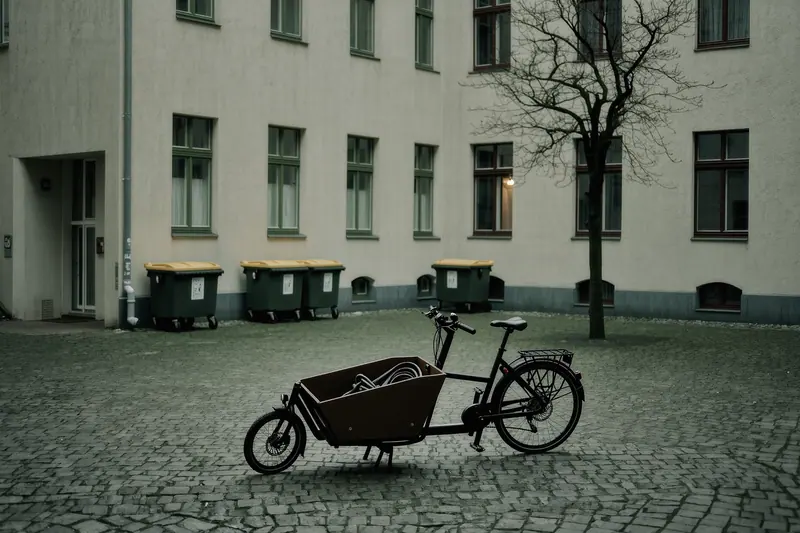
The bikes themselves
Shared bikes are built to survive strangers. That means heavy frames, three or seven gears, hard narrow saddles, brakes at whatever adjustment the last two hundred riders left them, and often no rack. They are fine for two kilometres across Mitte. They are grim for twenty-five along a canal, and they are actively poor in winter, where the lack of mudguards is the whole story — see winter cycling and what to rent for it.
A shop bike is set up once, for you, with a rack you can strap a bag to. Over a week that is worth more than the money either way.
The version that actually works
For most week-long stays the sensible answer is a hybrid, and it is worth stating plainly: rent a decent bike from a shop for the three or four days you have actual plans, and keep an app on the phone for the evenings when you do not want to ride home. That gets you a real bike for the long rides and removes the one genuine weakness of a rental, which is that it has to come home with you.
The same logic, in a heavier form, applies to four wheels: holding a vehicle you are not using is the expensive part. That comparison is in car sharing against a day rental, and the conclusion runs the other way, because a car standing still in this city costs you a parking problem as well as money.
What to check before you book
- Before choosing a sharing app, check on the map where the return zone ends. Outside it you either cannot end the ride or you pay to have the bike collected.
- Ask the shop what lock is supplied and whether the contract requires that specific lock to be used. Theft cover almost always turns on this.
- Find out whether your accommodation has a courtyard or cellar you may use. Many stairwells are off limits for fire reasons and a bike on the street overnight in this city is a gamble.
- Confirm the shop rental includes a rack or basket, lights and a pump, and that the saddle can be set for your height rather than the fleet average.
- If you are staying a month or more, ask about the monthly rate rather than the weekly one. The drop between them is usually steep.
- Whichever you choose, photograph the frame number and any existing damage on the day you take the bike.
Questions people actually ask
- Which is cheaper for seven days?
A shop rental almost always, if you ride more than about twice a day. Free-floating bikes charge an unlock plus a per-minute rate, and a twenty-minute crossing of the city costs several times what the same twenty minutes costs on a bike you already hold. Sharing wins only for occasional short hops, where you would otherwise be paying for a bike standing still.
- Where does the sharing zone end?
Broadly around the inner city and the districts immediately outside it, with the edges varying by operator and changing without much notice. What is consistent is that the lakes, the forests and the outer districts are outside it, so any ride to Mueggelsee, Wannsee or the Havel means either riding back or paying an out-of-zone charge.
- Are the shared bikes good enough for a long ride?
For three kilometres, yes. For thirty, no. They are deliberately heavy, geared low, fitted with narrow saddles and brakes that have been used hard by strangers, and few have a rack. Anything involving the canal towpaths, the patrol-road slabs or a lake trip is a different class of bike.
- What happens if a rented bike is stolen?
You will normally be liable up to a stated amount, and cover typically depends on the supplied lock having been used and the key being produced. Bicycle theft here is common enough that this is a live question rather than a formality. Ask what the liability figure is before you sign, and ask what happens if the bike is stolen from a locked courtyard rather than from the street.