GearBerlin
Lighting and grip hire for a one-day shoot in Berlin
Year round
Lighting and grip are two different hire lists and two different problems. This is what a one-day interview or product shoot in a Berlin flat actually needs, why the fuse board decides the lamp before the look does, and how the November light changes a booking made in June.
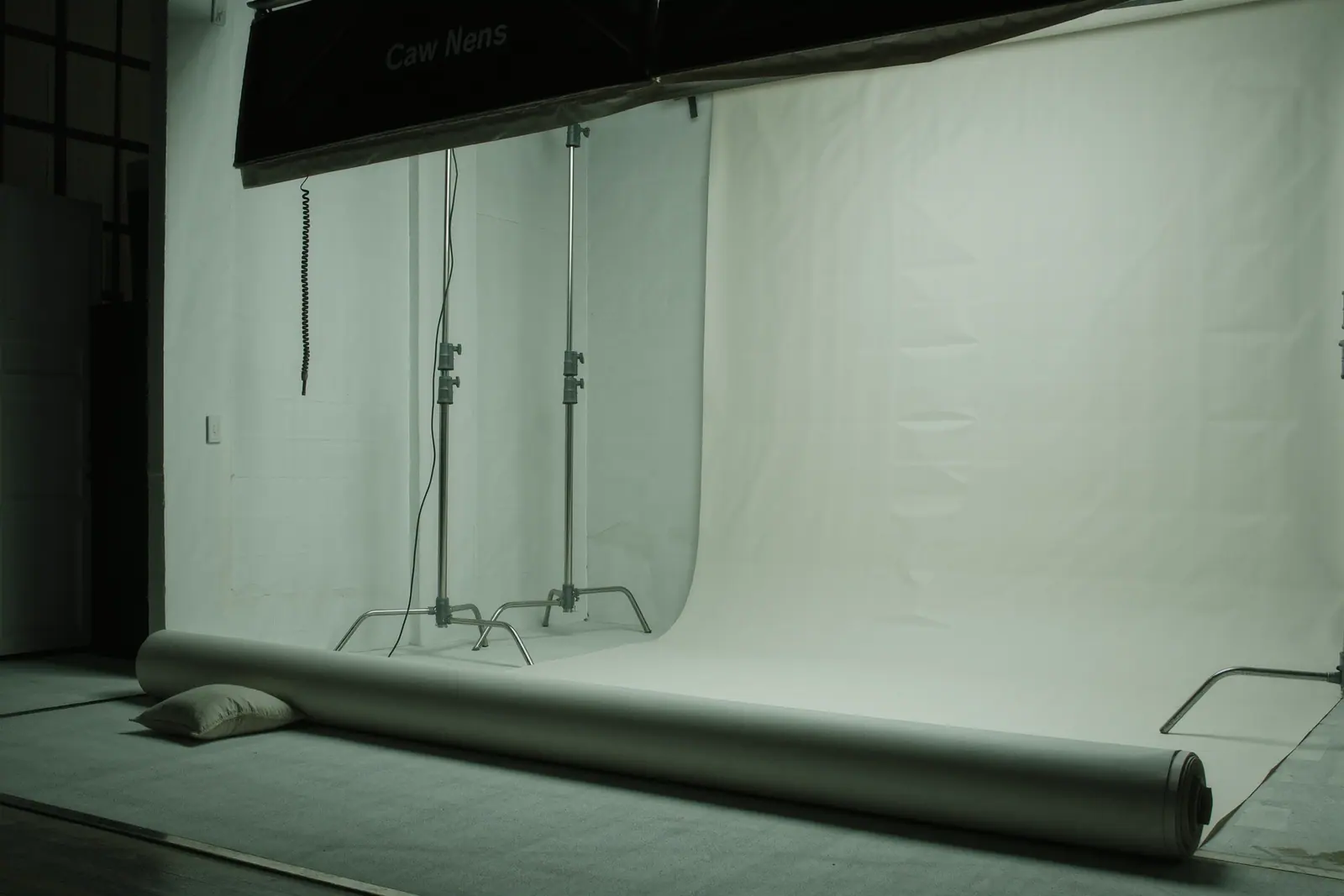
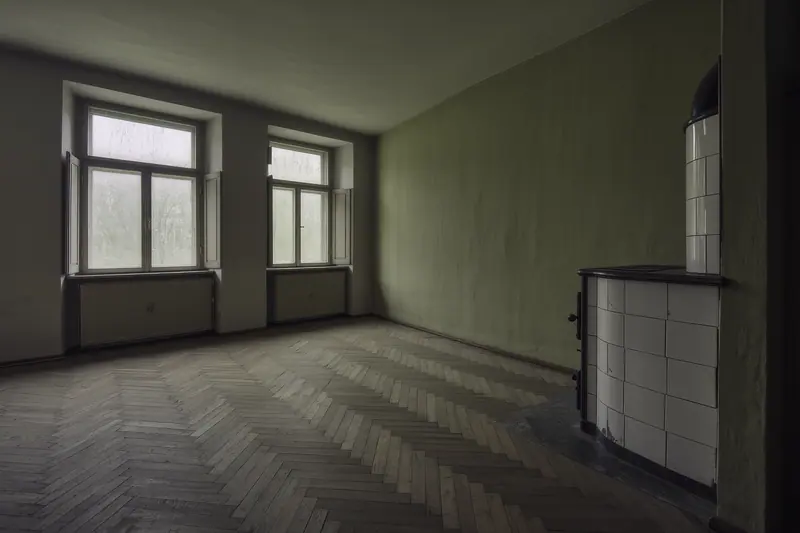
A fourth-floor flat in Neukölln, one camera, one interview, one day. The room is lovely: three-and-a-half metre ceilings, tall double windows, a floor that creaks near the stove. It faces a courtyard, it faces north, and it is the middle of November, so the usable daylight is a flat grey wash that ends before four.
There are two sockets in the room and one of them is behind a wardrobe.
That is the actual brief for most one-day shoots in this city, and it is why the lighting list should be written after somebody has looked at the fuse board.
Two hire lists, not one
Houses quote lighting and grip separately, and the grip list is the one that grows.
- Lighting — the fixtures, their control gear, gels, diffusion, and the distribution that feeds them.
- Grip — stands, clamps, arms, flags, frames, floppies, sandbags, apple boxes, ratchet straps, and anything with a wheel or a boom.
A quote that has a lamp package and no grip package is not cheap, it is incomplete. The rule of thumb that survives contact with a real shoot: every fixture needs a stand, every stand on a hard floor needs a sandbag, and every window you want to control needs a frame and something to hang it from.
The fuse board is the budget
Berlin flats in the pre-war stock were wired for lamps and a radio and rewired piecemeal since. What you typically find is a small number of household circuits covering several rooms each, and the socket you want on the same one as the kitchen. Nobody discovers that during the setup. They discover it when someone makes coffee during the second take.
Do this before booking:
- Photograph the board and count the breakers, with their ratings.
- Work out which sockets sit on which — plug a lamp in and switch breakers off one at a time. Twenty minutes on a recce saves the day.
- Add up the running current of every fixture you want, and leave one circuit completely free for the kettle, the chargers and whatever the owner does.
- Ask the hire house for extension drums with a residual current device, and unroll them fully. A coiled drum under load gets hot.
Efficient soft panels have made this survivable. A single large discharge lamp outside a window looks wonderful and is a different order of power request; in a flat it usually means a separate feed, and at that point a hired studio is cheaper and faster than the workaround.
The one-day interview list
| Position | Fixture | Grip it needs | Why |
|---|---|---|---|
| Key | One large soft panel | Combo stand, two sandbags | Does most of the work in a high-ceilinged room |
| Fill | Bounce board or a small panel | Light stand, one sandbag | Cheaper and softer than a second key |
| Background | One small fixture with a gel | Short stand or a clamp | Stops the courtyard going black at four |
| Window | Diffusion or neutral density on a frame | Frame, two stands, two bags | Turns an uncontrollable window into a source |
| Practical | Household lamps already in the room | Nothing | Sells the location better than a rented fixture |
| Negative fill | Two floppies or a black frame | Stands, clamps | The high white walls bounce more than you want |
Two additions that are worth their line on the sheet: a proper apple box set, because chairs and sofas in these flats are never at the right height, and a short length of cable ramp if you have to run anything across a doorway that a resident still uses.
What November costs you
Between late October and February the daylight in Berlin is short, low and grey, and courtyard-facing rooms — most of them, in the dense districts — get almost nothing. The consequences for a hire list are direct.
- Shoots that ran on daylight and a bounce board in June need two more fixtures.
- The exterior visible through the window is dark by mid-afternoon, so the background needs its own lamp or the frame reads as a hole.
- Colour temperature outside sits cold and flat, and mixing it with warm practicals is a choice you should make deliberately rather than fight in the grade.
- Everyone else has the same problem in the same fortnight, which is why diffusion frames and large soft sources are the first things to go out of stock in November and December.
The reverse is true in June, when the light holds late and a small kit does more than it should. That is the cheapest month of the year to shoot an interior, and almost nobody plans for it.
Stairs, weight and the thing that breaks the schedule
Stands and sandbags are the heaviest part of a shoot by a wide margin, and the buildings are the problem. Five half-flights and no lift, a stairwell that turns tight at each landing, an entrance passage with a step. A wheeled cart solves the street and the corridor and does nothing for the stairs.
Book a second pair of hands for the load-in if the list runs past a handful of cases. It is the least glamorous line on a budget and the one that most reliably gets the camera turning on time. Everything else about collecting kit across this city — where the houses sit, and how the weekend rate works — is covered in camera gear rental for a small crew, and what the house asks for instead of a deposit is in what a gear house wants instead of a deposit.
The mistake worth naming is hiring the biggest lamp you can afford. In a Berlin flat the limiting factor is never the fixture. It is the fuse board, the ceiling you cannot clamp to and the neighbour below who works nights. Hire one good soft source, twice the grip you think you need, and put the money you saved into a studio day for the shots that will not work here anyway.
What to check before you book
- Photograph the location fuse board before you build the kit list, and count the circuits that reach the room you are shooting in.
- Ask the hire house for the running current of every lamp, not the headline wattage, and add it up against those circuits.
- Book one more stand and two more sandbags than the plan needs. Both are cheap on the sheet and neither can be improvised.
- Confirm whether stands, clamps and flags are inside the lamp package or listed separately. Grip is where a quote quietly doubles.
- Check stairwell width and whether there is a lift before you hire anything on a wheeled base.
- If the shoot runs past sunset in winter, add a lamp for the window as well as for the face, or the background goes black at four.
Questions people actually ask
- What is the difference between lighting and grip?
Lighting is the light itself: lamps, control gear, gels, diffusion and the power to run it. Grip is everything that holds, blocks, shapes or moves things: stands, clamps, arms, flags, frames, sandbags, apple boxes and any wheeled base. Most houses quote them as separate lines, and a lighting quote that looks cheap has usually left the grip out.
- Can I run film lights in a normal Berlin flat?
Modest ones, yes. A typical pre-war flat has a small number of household circuits shared across several rooms, and the kettle in the kitchen is often on the same one as the socket you are using. Treat the fuse board as the true budget, favour efficient fixtures, and if you genuinely need a large discharge lamp, plan a separate feed or hire a studio instead.
- Do I need a permit to light a shoot in Berlin?
Inside a private flat or a hired space, no, though the owner may want notice. Outside is different: putting stands, cable or a generator on a pavement or a parking bay is use of public space, and the district office handles the application and any parking suspension. Rules and lead times vary by district and change, so verify with the district office well before the shoot day.
- How early should I book lighting for a winter shoot?
Earlier than for a summer one. From late October the whole city lights interiors that were shot on daylight in June, so soft panels, frames and diffusion move fastest. One to three weeks is normal; the fortnight before the winter markets and the December party season is the tightest window of the year.