PlacesBerlin
Photo studio hire in Berlin and what a day rate includes
Year round
A studio day is not a day and the rate is not the price. What is genuinely inside a Berlin studio booking, what is billed by the metre or by the half hour, why a north-facing daylight room is the wrong hire between November and February, and the load-in question that decides which studio you can use at all.
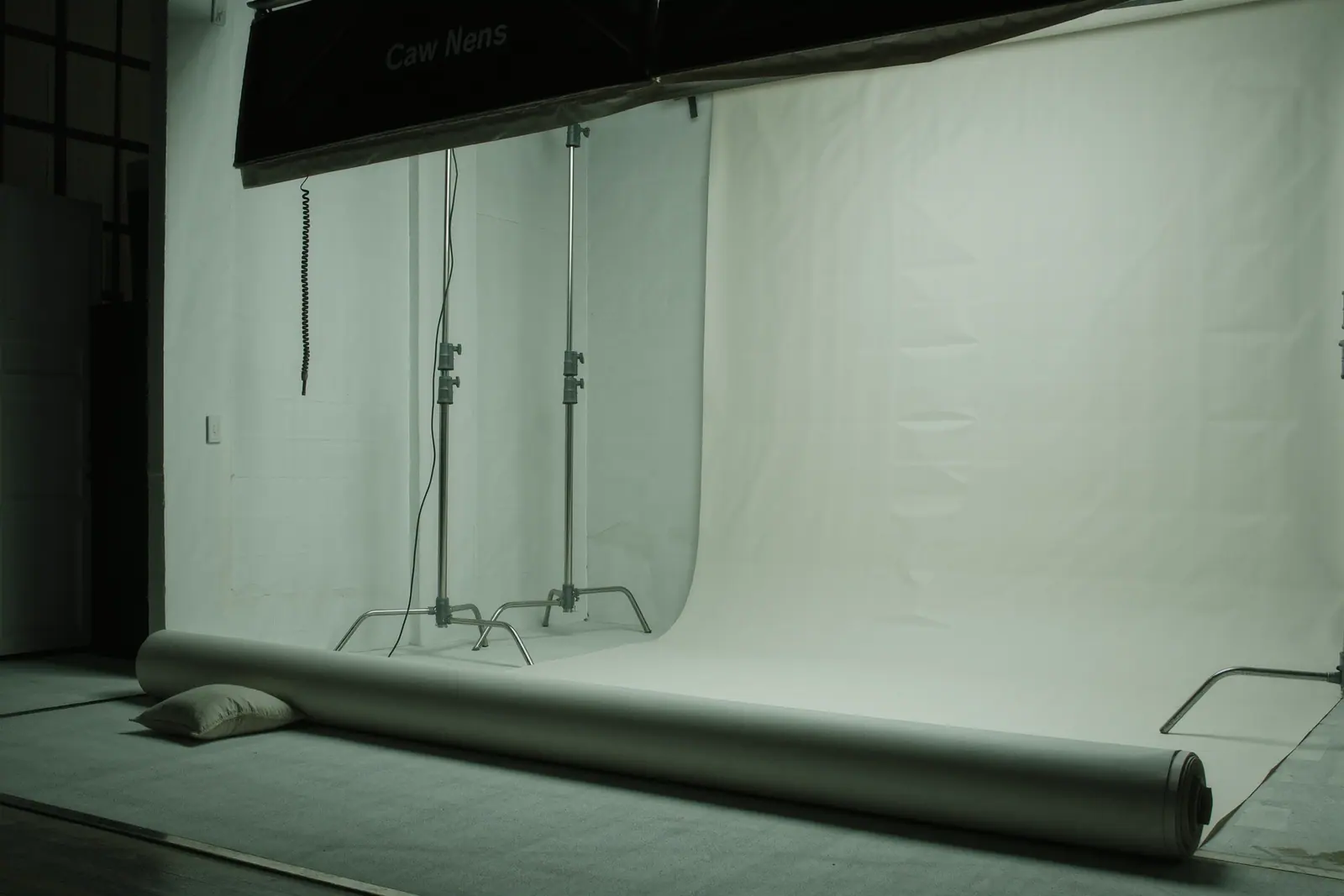
The booking confirmation says one day. What that actually means is a block of hours starting at the time you named, inside which you have to get everything up a goods lift, build, shoot, strike and be out with the floor swept. Then there is a paragraph about the cove, one about paper, and one about overtime in half-hour increments, and those three paragraphs are where a studio day stops matching the number you budgeted.
Berlin has a large amount of studio space because it has a large amount of cheap industrial floor area, most of it on upper floors of buildings that were built for something else. That shapes the whole product.
What the rate covers, and what arrives afterwards
| Item | Usually included | Usually extra | Notes |
|---|---|---|---|
| The room, for the booked hours | Yes | — | Build and strike are inside it |
| Cyclorama or infinity cove | Yes | Repaint if marked | The single most common extra charge |
| Blackout or daylight control | Yes | — | Check the blinds actually work |
| Power drops and distribution | Yes | — | Ask what is on each circuit |
| Basic light stands and boom | Often | Sometimes | Count them, do not assume |
| Flash heads and modifiers | Varies wildly | Often a package | The line that separates two similar rates |
| Background paper | No | By the roll or the metre | Someone will measure what you pulled |
| Changing area, kitchen, wifi | Yes | — | Rarely a differentiator |
| Assistant or studio technician | No | By the hour | Worth it on a first visit |
| Parking or a loading bay | No | Sometimes bookable | Frequently the deciding factor |
| Waste removal | No | Charged | Take your rubbish with you |
Ask for the full price list at enquiry rather than the day rate. Studios do not hide these charges, but they also do not lead with them, and two rooms quoting similar rates can differ substantially once paper and lighting are in.
Hours, overtime and the strike
The clock starts on the hour you booked. The most useful thing you can do is buy an hour at the front rather than hoping to finish early — the load-in, the coffee, the first light being wrong and the client arriving late all happen at the start, and they compress the shoot rather than the strike.
Overtime is usually billed in half-hour blocks and often at a higher rate, because the studio may have a booking behind you. If you are running late, tell them at the point you know rather than at the point you are over. A studio that has warned the next client is a much easier conversation than one that has not.
Daylight, and the four months it stops working
The north-facing daylight studio is the classic Berlin room: tall industrial windows, even soft light, high ceilings. From roughly May to August it is the best product in the city and worth every hour you book.
From November to February it is a room with a nice window. The sun is low, the cloud is unbroken for days at a time, and the light is gone by mid-afternoon. If you book a daylight studio in December you will be lighting the room anyway, and you will be doing it with the extra problem of a large cold window behaving as a blue fill you did not ask for.
The winter booking is a blackout room with a proper flash package, or a room with both. It is also the cheaper end of the market in exactly the months when demand for daylight collapses, so ask.
The goods lift decides which studio you can use
This is the question that eliminates more options than price. Most studios here are on the second, third or fourth floor of an old industrial building, reached by a goods lift installed for something heavier and narrower than a paper roll.
Get three numbers: the lift’s internal length, its door width and its weight limit. A three-metre background roll does not go into a lift with a two-metre internal length, and it does not go up an internal stair with a half-landing either. Some buildings solve it with an external hoist on the yard side, which is excellent and needs to be arranged in advance.
Then ask about the yard: whether a van can come in, whether the gate is open at your build time, and who lets a courier in. A studio with a courtyard you can back into is worth more than a slightly better room without one.
The cove, and the deposit behind it
The infinity cove is a painted plaster curve, and it marks. Heel scuffs, tape residue, a dragged stand and a spilled coffee all show, and all trigger a repaint charge because the next booking needs it white.
Photograph the cove at the start, work on it in clean soles or socks, keep tape on the floor rather than the curve, and tell the studio about a mark rather than hoping. Studios repaint constantly and they are reasonable about honest wear; what they charge for is a surprise found after you have gone.
When a studio beats a location
Run the comparison honestly. A hired studio costs a day rate and gives you power, a lift, heating, a floor you can rig above and no neighbours. Shooting in a flat costs nothing in rent and costs you the stairwell, two household circuits, the courtyard light in November and somebody’s afternoon — which is exactly the arithmetic in lighting and grip hire for a one-day shoot.
For anything static, product, portrait or repeatable, the studio wins from about half a day of shooting upwards. Book the extra hour at the front, and collect your camera kit the day before rather than on the morning. If you only need a room and not a cove, the hourly market for rehearsal and studio rooms in the same buildings is much cheaper and much less formal.
What to check before you book
- Ask how many hours a "day" is, when the clock starts, and how overtime is billed.
- Get the goods lift dimensions and weight limit in writing before you book anything you cannot carry up stairs.
- Confirm which lights are included, how many heads, and whether modifiers and stands are extra.
- Ask how background paper is charged — by the roll or by the metre pulled — and who cuts it.
- Find out the cove repaint charge and what triggers it. Heel marks and tape residue usually do.
- Check whether build and strike are inside the booked time. They almost always are, and they are an hour each.
- Ask whether the studio requires public liability cover before you rig anything to the ceiling.
Questions people actually ask
- How many hours is a studio day in Berlin?
Commonly around ten, and the number varies enough that it must be asked. What matters more is when the clock starts: at the time on the booking, not when your last person arrives. Build and strike sit inside it, so a ten-hour booking with a full build and a careful strike is closer to seven or eight hours of shooting.
- What is normally not included in a studio day rate?
Background paper, which is usually charged by the roll or by the metre pulled. Then assistants, catering, parking, waste removal, overtime, and any repaint of the cove if you mark it. Some studios include a basic lighting set and some include the room only. Ask for the price list rather than the rate, because the rate is the smallest number on it.
- Is a daylight studio worth hiring in winter?
Between roughly November and February, rarely. Berlin winter light is low, flat and short, and a north-facing room that is glorious in June gives you a couple of usable hours in December before you are lighting anyway. Book a blackout room with a good flash package in winter and save the daylight studios for late spring and summer, when they are genuinely the better product.
- What happens if I mark the cove?
You are charged for a repaint, and the charge is real rather than a threat, because the studio has a booking the next morning and someone has to roll it at night. Shoot in socks or clean-soled shoes on the cove, keep tape off the painted surface, and photograph the cove when you arrive so you are not paying for the previous booking.