On the waterBerlin
The engine power threshold, and what it means on Berlin water
Apr–Oct
Two boats at the same jetty can look identical, and only one of them may be driven after a briefing. The difference is a rated power figure on a plate. What that number is measured on, what documents have to be aboard, and the honest answer to whether the extra power would have made your day on the water any better.

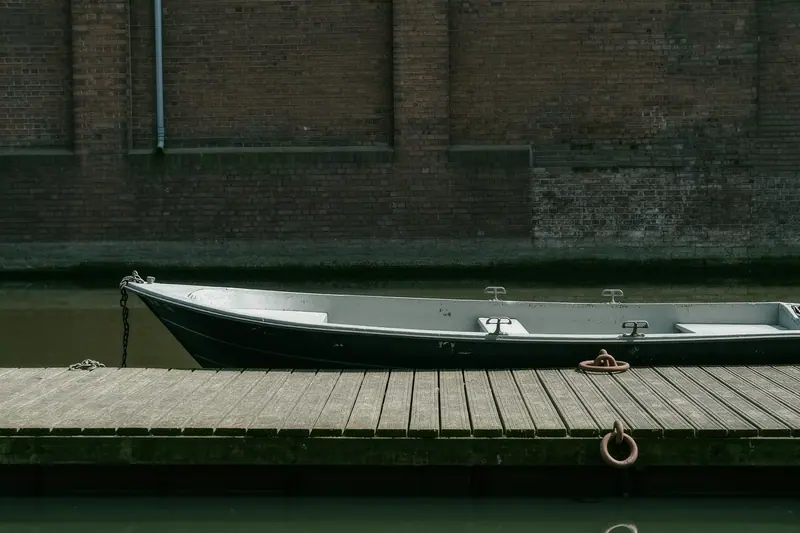
Two boats lie at the same jetty on the lower Havel. Same length, same open cockpit, same worn fenders and the same faded blue canopy. One of them you may take out this morning after a twenty-minute briefing. The other you may not touch without a licence you do not hold.
The difference is a small metal plate under the engine cowling, and a number stamped on it.
What the number is
The rule is built on the rated propulsion power of the engine — the figure the manufacturer certifies and puts on the plate — measured against a threshold set nationally for pleasure craft on inland waters. Below it, an adult may drive without a licence. Above it, a licence is required.
Two things follow that people consistently get wrong.
It is rated power, not used power. An engine capable of more than the limit does not become lawful because you keep the throttle at a quarter. The certification is the fact, not your behaviour.
Derating is a paperwork exercise, not a mechanical opinion. Engines are sometimes formally restricted to sit below the threshold. Where that has been done, documentation proving it must be aboard and must correspond to the plate. The person asked to produce it during a check is whoever is steering, which is you and not the hire firm.
There is also a separate scheme, applying on designated inland stretches, under which a short instruction session and a certificate allow you to take a more powerful boat. Where it applies and what it involves is defined nationally and by waterway. All of this has been revised over the years, so verify the current position with the operator and the waterways authority. Do not plan a trip around a number you read in an article.
What the power actually buys you here
Berlin water is not a place where engine power expresses itself. The waterways carry speed limits, the hire hulls are displacement shapes that will not plane at any realistic power, and the distances are short.
| Situation | Does more power help? | What actually helps |
|---|---|---|
| Cruising a limited stretch | No | Nothing; the limit is the limit |
| Against the Spree current after heavy rain | A little | Patience, and going with it on the return |
| Crossing open Havel water in a westerly | A little | A hull with less freeboard and less windage |
| Coming alongside in a crosswind | No | Approach angle, a bow line, and a slow arrival |
| Holding station outside a lock | Slightly | Using the wind to hold you, not the throttle |
| Getting off a lee shore | Yes, genuinely | Not being on one in the first place |
The honest summary: the only situation where the extra power would have made a material difference is the one you should have avoided.
What does change the day
If you are choosing between hire boats, ignore the engine and look at four other things.
- Windage. A high-sided boat with a fixed canopy is a sail. On the open Havel in a fresh westerly it will crab sideways at every manoeuvre, and the engine cannot fix that.
- Freeboard and cockpit depth. Low and open is wetter but far easier to handle and to board from a swim.
- Where the helm is. A wheel at the aft end with no forward visibility over a bow full of people is a recurring problem on family hires.
- Fenders and cleats. How many, and where. Mooring between posts needs cleats fore and aft that you can actually reach.
None of that appears in a listing. All of it is visible in thirty seconds at the jetty, which is a good reason to arrive before your briefing rather than exactly on time.
The rules the threshold does not touch
Being licence-free is a statement about one specific requirement and nothing else. Everything below still applies.
- The rules of the road, including how you pass and who gives way.
- The priority of commercial and passenger vessels, which on the Spree is not a courtesy but a rule about who physically can manoeuvre.
- Alcohol limits for the person steering.
- Minimum age requirements.
- The certified maximum number of people for the boat, which is a hard number.
- The operator’s own permitted area, which is usually tighter than the network and is the thing most likely to get you into trouble — that is dealt with in licence-free boat rental on the Spree and the Havel.
What to ask before you book
Ask the operator to state, in writing, the basis on which this particular boat may be driven without a licence: below the threshold, or under the certificate scheme with instruction provided. Those are different arrangements and they carry different obligations for you.
Then ask three practical questions. Is there a wind limit on the hire, and who decides? What do you want me to do if the weather turns? And where are the papers kept?
Choose the hull, not the number
The threshold is a licensing rule, and treating it as a performance specification is the source of most disappointment. Two boats at the same power behave completely differently depending on shape, weight and how much of them stands above the water.
If you want a fast day out, Berlin is not offering one at any power level; the limits see to that. What it offers is a slow, wide, wooded network you can be on without a course, and the boat to pick for it is the low, open, heavy-feeling one with good cleats. That is doubly true of anything with a cabin, where the wind problem becomes the defining one — see houseboat and floating accommodation hire before you assume a bigger boat is an easier one. For what the day itself looks like, the Havel lakes route is the place to start.
What to check before you book
- Ask the operator to confirm, in writing, on what basis this specific boat may be driven without a licence.
- Look at the engine plate yourself at handover and photograph it together with the boat papers.
- If the engine has been derated, confirm the supporting documentation is aboard and matches the plate.
- Verify the current national threshold with the waterways authority rather than relying on any article, including this one.
- Ask whether the charter certificate scheme applies on the water you will actually be using, and what instruction it involves.
- Confirm the boat's certified maximum number of people, and whether children count towards it.
- Ask what the operator expects you to do if the weather turns, and whether there is a wind limit on the hire.
Questions people actually ask
- What exactly does the power threshold apply to?
The rated propulsion power of the engine, as certified and shown on the plate, not the power you happen to use. An engine capable of more than the limit does not become compliant because you keep the throttle down. Where an engine has been formally derated to sit below the threshold, the documentation proving it has to be aboard and has to match the plate, and the person asked to produce it will be whoever is steering.
- Would a more powerful boat be better on Berlin water?
Rarely, because the waterways carry speed limits and the hulls used for licence-free hire are not built to plane. More power buys you a little more authority against a current or a crosswind and almost nothing in journey time. What genuinely changes a day is hull shape, freeboard and how much windage the boat has, and none of those appear in a hire listing.
- Is the threshold the same everywhere in Germany?
The framework is national, which is why operators describe it the same way across the country, but the practical picture differs by waterway: some stretches carry additional requirements, the charter certificate scheme applies only where it has been designated, and marine waters are governed separately. Check the specific waterway you will be on with the authority responsible for it, and ask the operator what applies to their permitted area.
- What happens if I am checked on the water?
A routine check looks at the boat papers, the engine, the number of people aboard and whoever is steering. The hire firm will have put the documents in a folder somewhere in the console; find it during the briefing rather than during the check. Being unable to produce papers for a derated engine is the single most awkward version of this conversation, and it is entirely avoidable.