Two wheelsBerlin
Which cargo bike shape suits which load
All year
Rental listings sell frames. What matters is the shape of the load bay, the turning circle and whether the thing fits through a carriage arch. A plain comparison of the four cargo bike layouts you can actually hire here, what each carries well, and the Berlin street conditions that break each one.
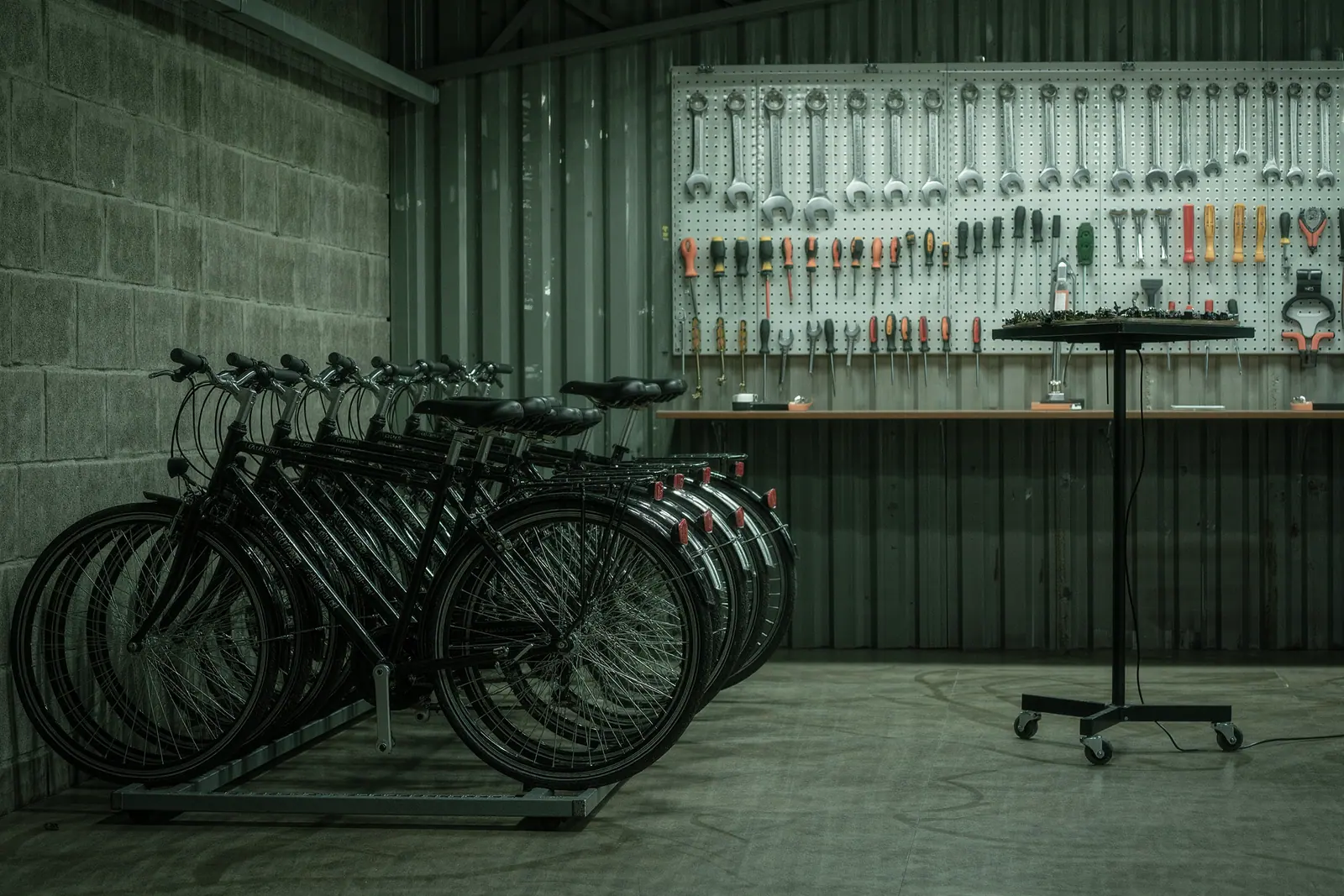
A rental listing will tell you the brand, the frame material and the motor. None of those decide whether the thing gets your load across Neukölln. What decides it is the shape of the load bay, the turning circle, and whether the bike fits through the carriage arch at the far end.
There are four layouts in common hire fleets here. They are genuinely different tools, and picking the wrong one costs you a run.
The four shapes
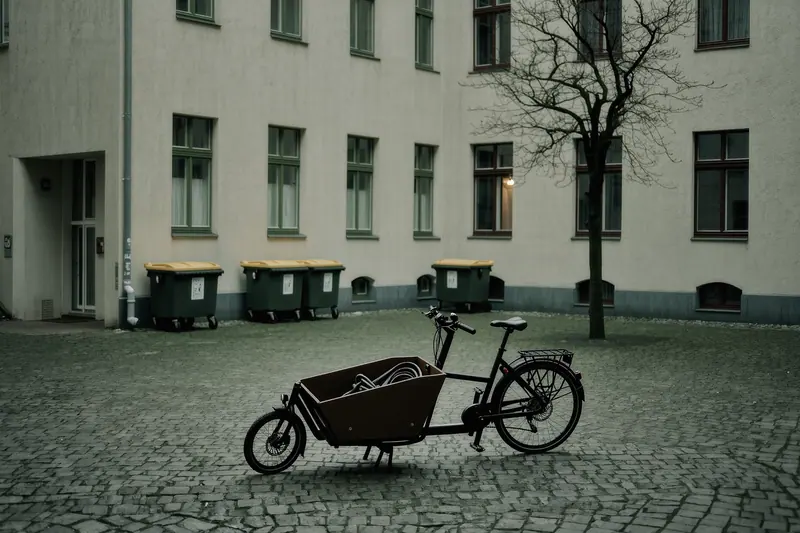
Long box, two wheels. The classic front loader: a low open box between the rider and a small front wheel, steering through a rod linkage. Around 2.5 to 2.7 metres long. Load bay roughly 90 by 60 centimetres, knee deep. This is the default hire bike and the most useful all-rounder.
Long tail. A normal bicycle with the rear stretched: a long rack behind the saddle, side bags, sometimes a bench. About 2.1 metres. Rides like a bike, because it is one. Carries far less bulk than a box but handles like nothing unusual, which matters in traffic.
Box trike. Two front wheels with a wide box between them, or two rear wheels with a box behind. Highest payload of the four, stands up on its own, and by some distance the most awkward thing to ride in this city.
Flatbed. A deck with lashing eyes instead of a box, usually on a trike frame. Rare in hire fleets, superb for furniture, useless for anything that rolls.
| Shape | Typical payload | Best at | Worst at |
|---|---|---|---|
| Long box, two wheels | 80–100 kg | Boxes, shopping, one child, general moving | Anything over 1.2 m that will not overhang |
| Long tail | 60–80 kg | Two children, bags, riding in traffic | Bulk, flat panels, anything rigid |
| Box trike | 100–150 kg | Heavy, dense loads; loading alone | Narrow lanes, camber, bollards, arches |
| Flatbed | 100–200 kg | Furniture, panels, long items | Loose items, rain, tight turns |
Where each one fails, specifically here
Setts. Granite setts survive on side streets right across Prenzlauer Berg, Mitte and parts of Kreuzberg, and they are not decorative — they are the road surface. A long box on setts shakes a stacked load loose within a hundred metres unless it is strapped. A trike on setts transmits everything through a rigid rear axle and is genuinely unpleasant.
Tram rails. Everywhere east of the ring the rails share the carriageway. A narrow front wheel on a long box will find the groove, and a loaded front loader does not recover from that as quickly as a normal bike. A trike straddles the rails without drama, which is one of its few clear wins.
Camber. Berlin side streets are strongly cambered to the gutter for drainage. A two-wheeler leans a degree and forgets about it. A trike does not lean, so the rider corrects continuously with the bars for the whole journey. Over five kilometres it is exhausting.
Bollards and chicanes. Park entrances, canal-side access points, the barriers where a path meets a road: the gaps are often around 90 centimetres. Most trikes are wider than that. Measure the track width, then measure the narrowest point of your route, before you take a trike anywhere near the canal towpath.
Carriage arches. Old buildings turn into a courtyard through an arch, often with a raised stone kerb. A long box needs the length to swing; a trike needs the width. This is the single most common reason a hire bike ends up parked on the street instead of in the yard.
Matching the load to the shape
- Twenty moving boxes across two kilometres. Long box. Six a run, stacked two high, netted. Detail in renting a cargo bike for a weekend move.
- A dismantled bed and a wardrobe. Flatbed if you can get one, long box with the panels on edge if you cannot. Never a trike with a fixed bench.
- Market shopping for a shared flat. Long tail. Faster in traffic, parks in a normal rack, and nothing you buy is rigid.
- Two small children to a nursery in Wedding. Long box with a bench and belts, or a long tail with seats — the trade-offs are in bike rental with children, trailers and seats.
- A washing machine. Box trike, strapped upright against the box front, and a route without setts. This is the one job where the trike is unambiguously right.
- Sound kit, cases, market stall. Flatbed or trike, because the load is dense and you will be loading it alone.
Electric or not
Berlin is flat. That is the argument against paying for assistance, and over short distances with a moderate load it holds. The argument for it is not hills; it is repetition. Ten loaded runs in a day on an unassisted long box is real work, and the fifth one is where people start taking the shorter route across the junction rather than the safer one.
If the day involves more than about six runs, or any load above roughly fifty kilos, or the Kreuzberg-to-Wedding sort of distance, take the assistance. If it is one afternoon of light bulk over a kilometre, do not pay for it.
The handover, in ninety seconds
Sit on it in the yard before you leave. Check the double stand holds the bike loaded rather than empty. Turn a full circle in the smallest space you will actually face. Pull the parking brake on the slope of the gateway and see whether it holds. Photograph the box interior, the frame number and the tyre sidewalls, because the box is where scratches get argued about later — which, along with the money side of it, is set out in what a cargo bike deposit and insurance look like.
If the shop offers a trike because the long boxes are gone, ask yourself where your narrowest gap is before you accept. A trike you have to walk around three bollard chicanes is slower than the bike you did not get.
What to check before you book
- Ask for the payload plate figure, and subtract your own weight from the total system limit before you plan the load.
- Measure the box internally in three dimensions and write the numbers down. Listings quote outside length, which is not what your wardrobe panel cares about.
- For a trike, check the outside track width against the narrowest bollard gap on your route. Park entrances here are frequently under a metre.
- Test the parking brake on a slope before you load. A loaded trike on a cambered street with no brake moves on its own.
- Ask whether the box has drain holes and a cover. An open box left overnight in an autumn week becomes a bath.
- Confirm the bike has a double kickstand, not a side stand. Loading a bike on a side stand is a two-person job you did not plan for.
Questions people actually ask
- Is a trike more stable than a two-wheeler?
Standing still, yes, and that is a real advantage when loading alone. Moving, it is more complicated: a trike does not lean, so it tips outwards in a fast turn and it fights the road camber constantly. On the cambered side streets of older Berlin districts a loaded trike pulls steadily towards the kerb, which is tiring over any distance.
- Which shape is best for moving furniture?
A flatbed or an open long box, because furniture is awkward rather than heavy and the sides of a deep box get in the way. A flat deck with lashing points takes a bed base, wardrobe panels or a table top flat and strapped, none of which will sit in a child-carrying box with a bench in it.
- Do I need experience before riding one?
Ten minutes in a quiet courtyard is usually enough for a long-tail, and twenty for a long box. The steering on a front-loader runs through a linkage and feels vague and slow at first, which corrects itself once you stop looking at the front wheel. Trikes take the longest, because the instinct to lean has to be unlearned.
- Can two adults ride one?
Carrying an adult passenger in the box is generally not what these bikes are rated or permitted for, and the rules on carrying passengers on a bicycle are set nationally. Check with the shop and with the road authority rather than assuming, and note that many rental contracts exclude it outright regardless of the legal position.