On the roadBerlin
Van sizes and what actually fits a one-room flat
All year
Everyone books a van by volume and then discovers the mattress will not lie flat. What a one-room Berlin flat really amounts to, the internal length of each van class, when a tail lift is worth a whole size upgrade, and the honest comparison between one big vehicle and two trips in a small one.
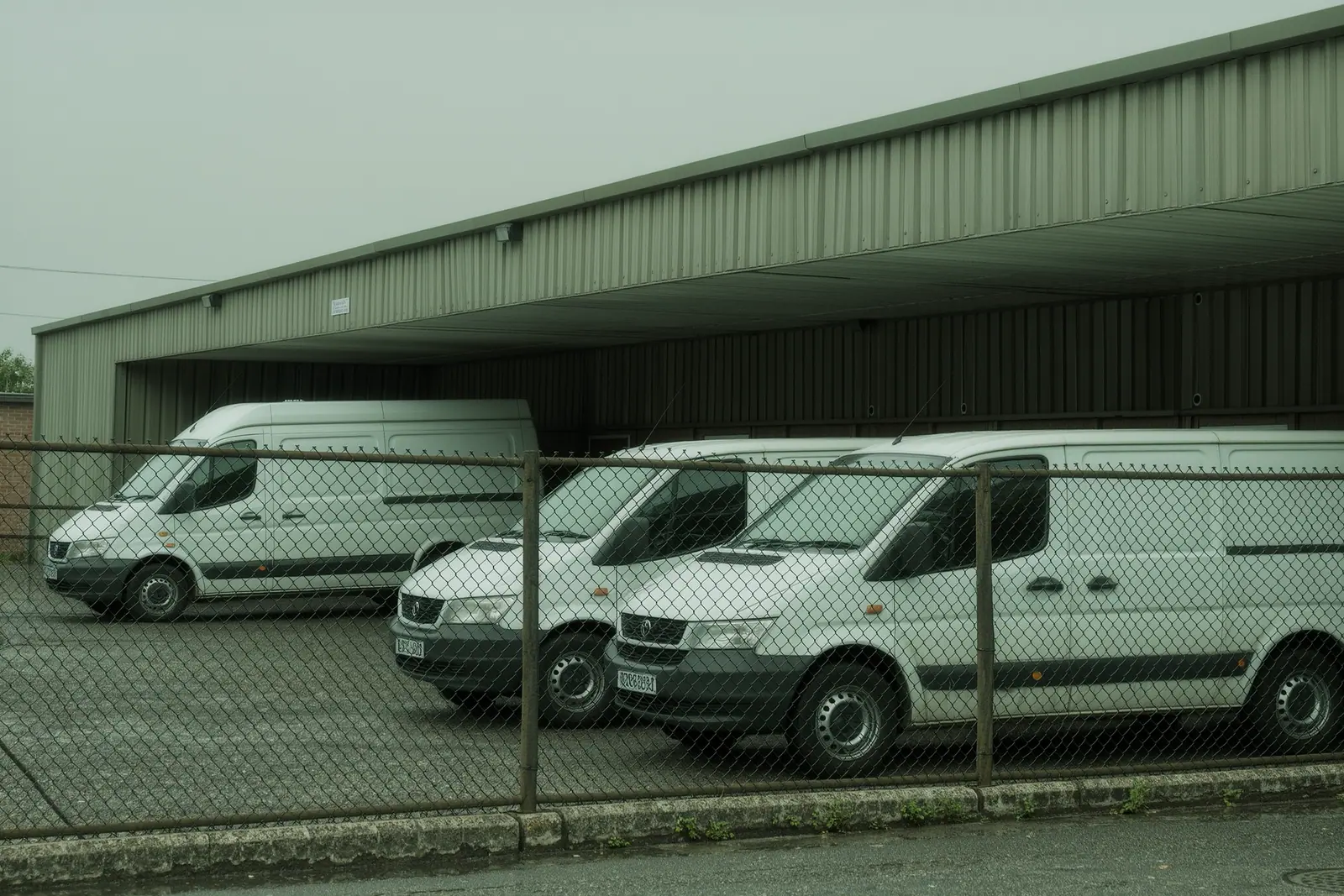
The van hire page asks you to choose by cubic metres, so people do. Then they get to the flat, stand a 200 centimetre mattress against a load bay 180 centimetres long, and discover that the number they booked on was the wrong one.
Volume tells you how much stuff fits. Length tells you whether the awkward items go in at all, and in a Berlin flat the awkward items are the whole problem.
The four classes, in the dimensions that matter
| Class | Load volume | Internal length | Load height | Longest item it takes |
|---|---|---|---|---|
| Car-derived van | 3–4 m³ | 1.6–1.8 m | 1.2 m | Boxes, a chair, a bike with the wheel off |
| Small panel van | 5–6 m³ | 1.8–2.0 m | 1.4 m | A mattress, just, diagonally |
| Medium panel van | 8–9 m³ | 2.4–2.6 m | 1.7 m | Bed frame, wardrobe panels, sofa |
| Long high-roof van | 11–13 m³ | 3.1–3.4 m | 1.9 m | Everything in a one-room flat |
| Box van, tail lift | 18–20 m³ | 4.0–4.3 m | 2.1 m | A two-room flat, in one go |
Two dimensions beyond length are worth asking for. The width between the wheel arches decides whether boxes stack in two columns or one and a half, which changes the effective capacity by a surprising amount. The door aperture height is what actually stops a tall wardrobe, not the roof height, because a high-roof van often has a rear door that is lower than the load bay behind it.
What a Berlin one-room flat really is
A studio or one-room flat here typically means one room plus a kitchen and bath, somewhere between 30 and 45 square metres, and the contents come out at eight to twelve cubic metres. That fits comfortably in a long high-roof van with room to strap things down, and it fits into a medium van only if you are ruthless.
Where it goes wrong is the specifics of the housing stock. Old flats here have high ceilings, so people own tall shelving. They have no fitted wardrobes, so everybody owns a free-standing one, and free-standing wardrobes in this city are either 200 centimetres of solid carcass or a flat-pack that has already been assembled twice and will not survive a third. And nearly every household has bicycles, which take up far more room than their volume suggests because they will not stack.
Count the wardrobe, the bikes and the bookshelves first. They are the three that force the size up.
The tail lift is a size decision in disguise
If you are moving a washing machine, a full-height fridge or anything above roughly sixty kilos in one lump, the question is not how big the van is. It is whether you can get the thing off the ground.
A medium van with a tail lift will move a one-room flat with white goods far more comfortably than a long van without one, because the alternative is two people, a ramp and a strap on a wet Saturday. Tail lifts also mean a longer vehicle overall, so check the arch measurement again.
Ramps are the cheap middle ground and they are genuinely fine for anything on castors or anything two people can walk up. They are not fine for a washing machine.
One big van or two small trips
Run this honestly.
Take the bigger van when the courtyard or the street can take it, the move is across town rather than around the corner, and you have a permit zone at both ends. One loading, one drive, one unloading.
Take two trips when the arch is genuinely too small, or the new street has no legal space for anything long, or the price difference between classes is large and the two addresses are within a couple of kilometres of each other.
What tips it is rarely the rental cost. It is the permit window: a temporary no-stopping zone is applied for with dates and hours, and two trips means it has to cover a much longer span at both ends. That process is set out in the temporary no-stopping zone you need for a move, and stretching it is the part that costs money.
For very short moves there is a third answer that people underrate, which is not using a van for the small stuff at all — twenty light loads over a kilometre is exactly what a box bike is good at, as described in renting a cargo bike for a weekend move.
The kit you rent with it
Book these at the same time as the van, because they are separate items and the depots run out of them on the last weekend of a month:
- A sack truck. The single most useful thing in a Berlin move, because of the stairs.
- Furniture blankets, six or more. Old flats have door frames that take paint off furniture and furniture that takes paint off door frames.
- Two ratchet straps. A half-loaded van on cobbles rearranges itself.
- Wardrobe boxes, if you own hanging clothes and no wardrobe worth moving.
One thing you cannot rent is a lift, and in this housing stock that is the real constraint. A fourth-floor flat with no lift means the van size stops mattering after a point: the bottleneck is the staircase and the number of people on it. Two extra pairs of hands shortens a Berlin moving day far more than an extra cubic metre does — and if the date is the last weekend of a quarter, hands are exactly what everybody else is also looking for, as covered in moving at the end of the quarter.
What to check before you book
- Ask for the internal load length, width between the arches and door aperture height in centimetres. Cubic metres alone will not tell you whether the mattress lies flat.
- Measure your longest item. If anything is over two metres and cannot be dismantled, that item chooses the van.
- Check whether the width between the wheel arches takes a standard pallet-width load, because that is what decides how the boxes stack.
- Decide about a tail lift before you decide about size. A tail lift on a smaller van beats no tail lift on a bigger one for white goods.
- Confirm the vehicle height and compare it to your courtyard arch and any garage on the route.
- Book a sack truck, blankets and straps at the same time. They are separate line items and they run out on the last weekend of the month.
Questions people actually ask
- How many cubic metres is a one-room flat?
Somewhere between eight and twelve for a sparsely furnished one, and up to about fifteen if it has been lived in for years. A workable rule is roughly a third of a cubic metre for every square metre of floor area, rising towards half for a flat with a lot of furniture, books or tools. Count the bicycles separately, because they never pack the way you imagine.
- Which van moves it in one trip?
A long high-roof panel van, in most cases. It gives you around eleven to thirteen cubic metres, over three metres of internal length so a mattress and bed frame lie flat, and it is still narrow enough to drive and park in the inner districts. The next size up is a box van, which is easier to load and much harder to put anywhere.
- Do I need a tail lift?
Only if you are moving something you cannot carry: a washing machine, a full-height fridge, a heavy chest of drawers or a piano. For those, a tail lift on a medium van beats a bigger van without one, every time. For boxes and flat-packed furniture a simple ramp is enough and many vans do not even need that.
- Is two trips in a small van cheaper?
On the rental line, yes. On the day, usually not. A second trip costs you the drive both ways, a second round of loading and unloading, and either a second parking solution or a permit that has to cover a longer window. Where two trips genuinely win is when the bigger van cannot get into the courtyard and the smaller one can.